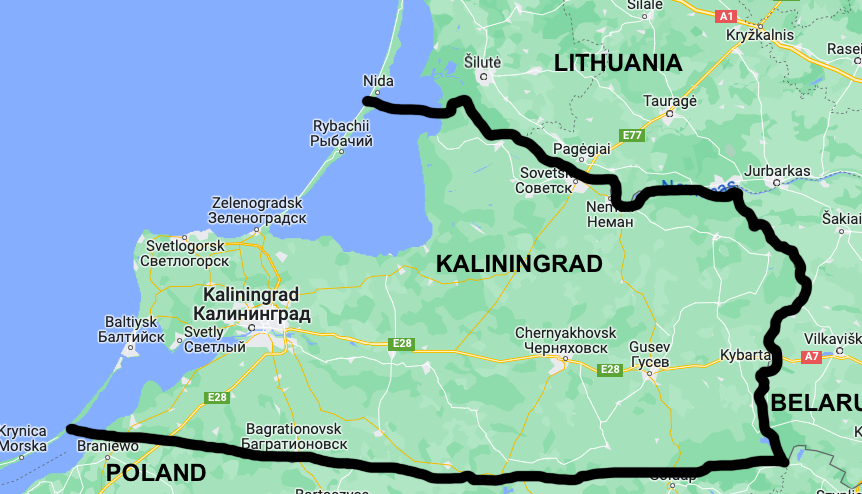
What to make of Kaliningrad? A geographical aberration, sticking out like a geopolitical sore thumb, and nothing but trouble for several Eastern European nations and for the NATO alliance overall. An exclave of Russia, meaning it’s Russian territory, although not physically connected to Russia proper. Bristling with weapons, it acts as a forward-projecting military base whereby the Russians can play their historical role as shit disturbers-in-chief, in this case in the Baltic Sea and on the borders of Lithuania and Poland.
How in Hades did the Russians manage to hang onto this spot? It’s like ISIS or Al Qaeda having a Purolator parcel depot in an American mall. Literally, the enemy with a forward operating base right in the middle of your driveway. It’s one of the most son-of-a-gun things you can find on a map of the world today, and it’s something that’s going to have to be dealt with some day. In fact, I have no doubt that NATO has no shortage of weapons currently trained on the place, and, in the event of hostilities with a self-destructing Russia, Kaliningrad would likely be the first Russian asset removed from the board.
For an explanation as to why Russia maintains control of Kaliningrad, a combination of historical, political, and strategic factors need to be considered.
Kaliningrad was originally part of East Prussia, was once German, and was captured by the Soviet Union during World War II. After the war, the region was annexed by the Soviet Union and became known as the Kaliningrad Oblast. The Russians followed this up with a well-worn tactic, that being the flooding of Russian speakers into the territory to confirm its Russian-ness. The region’s ties to Russia are deeply rooted in its history, and this historical connection is often cited as a basis for Russia’s claim to the territory. That and the fact that so many Russians live there. So, note to everyone: if you notice a lot of Russians moving into the neighbourhood, get ready to become an oblast.
It’s not just any old place. Kaliningrad is strategically located on the Baltic Sea between Poland and Lithuania, with access to the Baltic Sea being vital for Russia’s maritime and naval interests. If the Russians didn’t have it, they would be all pinched into a tiny spot of the Baltic around St. Petersburg. With Finland now part of NATO, the Russians would have to navigate a fairly narrow stretch of the Baltic between Finland and Estonia, which is an extraordinarily vulnerable stretch of water for the Russians. As such, the region’s strategic importance gives Russia motivation to maintain control over it.

Russia, of course, has a significant military presence in Kaliningrad. The region hosts a number of military bases, including naval and air bases, which allow Russia to project its military power in the Baltic region. This military presence acts as a deterrent to potential challengers and reinforces Russia’s control over the territory. Kaliningrad’s location also gives Russia a geographical advantage in terms of exerting influence over neighbouring countries and the broader Baltic region. Russia’s control over Kaliningrad allows it to maintain a presence closer to NATO member states, which can impact regional dynamics and alliances. In other words, stir up shit.
Over time, Russia has maintained economic ties with Kaliningrad, with trade, investments, and economic activities helping to solidify Russia’s influence in the region.
Russia has worked to integrate Kaliningrad into its national identity and administrative structure. The local population has been granted Russian citizenship, and Russian cultural and educational institutions have been established in the region, which helps reinforce a sense of connection with Moscow. Some people might call this assimilation. In Russia, they call it Tuesday.
Kaliningrad is a Potemkin village of sorts, full of sound and fury, but signifying nothing. The significant military assets currently in place in the exclave have no real value other than just being for “show.” In a shooting war with NATO, those forces would be wiped out in the first hour, and without a shooting war, they’re just sitting there, perfect targets. And little help on offer from the rest of Russia as there is no land corridor connecting the two, what with Lithuania, Poland, and Belarus in the way. Sure, Belarus is a Russian ally, but the kind of ally that makes most folks wish they had more enemies.
So, as it happens, Russia has spent all kinds of money it no longer has to station its military assets there. That’s money and assets that could be used in other places, like maybe Ukraine where they’re being militarily embarrassed by the Ukrainians. And those assets, along with the money spent to set them up and maintain them, will be lost within an hour of any situation that would require the Russians to have military readiness. In short. Kaliningrad is a waste of space, weapons, and money for the Russians.
It once really bothered me that the Russians had control of the place at all. But after giving it some thought, I’m all for the Russians wasting their time and resources in Kaliningrad. It fixes their military assets in place so they can’t be used elsewhere, and when the time comes where it becomes necessary, NATO wipes those assets right off the map.
Kaliningrad couldn’t be better if it were our idea. That the Russians created their own dilemma there just makes the whole thing taste sweeter.
 NEWSMAGRENFREW