I’m going to hate writing this.
Mostly because it will fly in the face of what everyone else likely thinks. It’s not like I’m looking to be contrary for the sake of being contrary. And I don’t do it lightly.
This has been percolating in my mind for 36 hours now, and I know I could have left it alone and see it wash downstream, but then again, I also knew I couldn’t.
No offence intended towards anyone.
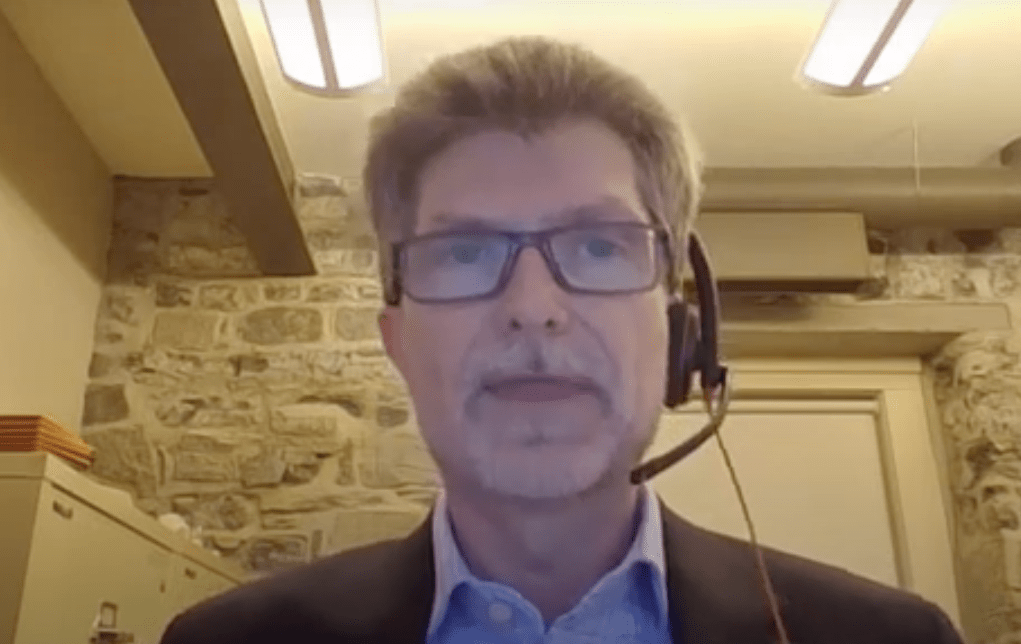
Tuesday night, Integrity Commissioner Tony Fleming attended Council via Zoom and delivered his findings on two separate complaints filed under the Council Code of Conduct. His presentation was professional and coherent, and everything you’d want to see from someone tasked with the resolution of these complaints.
Following Mr. Fleming’s report, findings and recommendations, Council was invited to ask questions or provide commentary. I believe every elected official in the room spoke. I further believe that all but one, and perhaps all, signalled a willingness to demonstrate generosity towards the two colleagues who were the subjects of the complaints. Led by Councillor John McDonald, councillors made statements indicating their understanding of how sometimes events can overwhelm decorum, and can lead to passion spilling over in a manner not confined by the Code of Conduct. They further indicated that, in their view, both members had expressed remorse for their actions privately, and that they took these professions of remorse to be genuine. Therefore, despite the Integrity Commissioner recommending public apologies and official censure, Town Council, as a group (the two subjects of the complaints had recused themselves for the discussion) declared that no apologies were to be ‘forced,” or needed to remedy the situation.
This is all noble and good. Full marks for compassion and walking in the spirit of generous forgiveness.
However, why have an Integrity Commissioner if you’re simply going to ignore his recommendations? Censure and apology are not the end of the world, but they are legitimate indicators of society’s need, and requirement, to ensure a proper decorum in our public and official spaces.
For the record, I have no desire to see either councillor Dick or Reeve Emon consequenced in any manner. Both are devoted and well-meaning men, both add value to Council. Both fell victim to personal circumstances where, perhaps, their judgement may have gotten the better of them. Perhaps in the great scheme of things, no harm, no foul.
But the Integrity Commissioner did his job and rendered a report, and in that report there were recommendations, and those recommendations were ignored, and this then becomes the slippery slope.
The recommendations for an apology and some form of censure were not just trotted out because he had nothing else to offer. They likely represented the least intrusive way in which the Code of Conduct can be enforced and the decorum of the Chamber respected. Those consequences are pro-forma consequences, and they are needed by the institution, not the members of the institution. And so, while generous in nature, Council’s unwillingness to expect apologies undercuts the process behind enforcement of standards.
The mayor himself said that one of the goals of the current council was to instill a sense of professionalism in the doings and workings of Council generally. Then he disregards report recommendations from an Integrity Commissioner, which is, on its face, the antithesis of professionalism.
The Integrity Commissioner is the same fellow, or group of fellows, who conduct all sorts of investigations, including when a council is challenged on its rationale for having too many close meetings without proper justification. If this is the process, where complaints are made, reviewed, reported on, then dismissed, then you’ve just shot down one of the existing mechanisms that protects transparency.

It probably doesn’t do Tony Fleming much good either. He does his job, files a report, makes recommendations, shows up via Zoom, is treated with deterrence, then is politely ignored. I know he gets paid no matter what, but sometimes we’re about more than just collecting a pay cheque. He is, no doubt, earnest in his work, and so a dismissal of his recommendations would be something he might take note of. Might it influence future complaint investigations, and recommendations? Perhaps not, and hopefully not, and I have no reason to think that they would or even might. But I’ll bet he took note. I know I would.
No amount of good intention can be allowed to interfere with a process that was put into action earlier and that has been established to guarantee at least a semblance of transparency and openness. So, I appreciate the statements of goodwill, in fact applaud them. It was genuinely nice to see, and I’m sure appreciated by more than just the two individuals in question.
Arguments were made calling into question the value of a “forced” apology, and whether such an apology has any real value, as it’s not freely given and may lack sincerity. I get the point, and recognize the logic, but I can still walk away from both in that, it doesn’t matter if the apology is mandated or expected or done with a lack of sincerity. The key element is that it was undertaken, it was required, and it was part of the price paid for crossing the line. There is no way to measure the sincerity resident in anyone’s heart, so doing without apologies with this as your reason is the same thing as doing away with apologies period.
The salient point is that the transgressor openly states the transgression, recognizes it as being inappropriate, apologizes for harm done, and resolves to do better moving forward. Any Catholic attending Confession with integrity would recognize this process. It requires strength and integrity. It is not a sign of weakness or humiliation.
And the institution requires it.
So, if there’s to be an Integrity Commissioner, and if there’s to be legitimate transparency that extends beyond the mouthing of words, then reports like these ought to be respected in their entirety. Failing to do so, no matter the nobility of thought, sets a precedent that doesn’t need to be set, especially in a time and place where trust and transparency is at a premium.
Despite what was looking like it was going to be a free pass, Reeve Emon did take the opportunity to express his regret for his actions and the tumult they may have caused. That, too, is good form, right up there with the statements of generosity made by his peers.
With respect to the other case, nothing was offered by Councillor Dick publicly, notwithstanding the overtures made privately in the past to other members of Council. But it’s to Council, not its individual members, that those statements of regret ought to be made.
To Renfrew Town Council, the institution. Not Renfrew Town Council, the members.
I also have no idea how the un-named councillor of a previous council may react upon being notified of the final result.
That’s my topic for tomorrow.
 NEWSMAGRENFREW