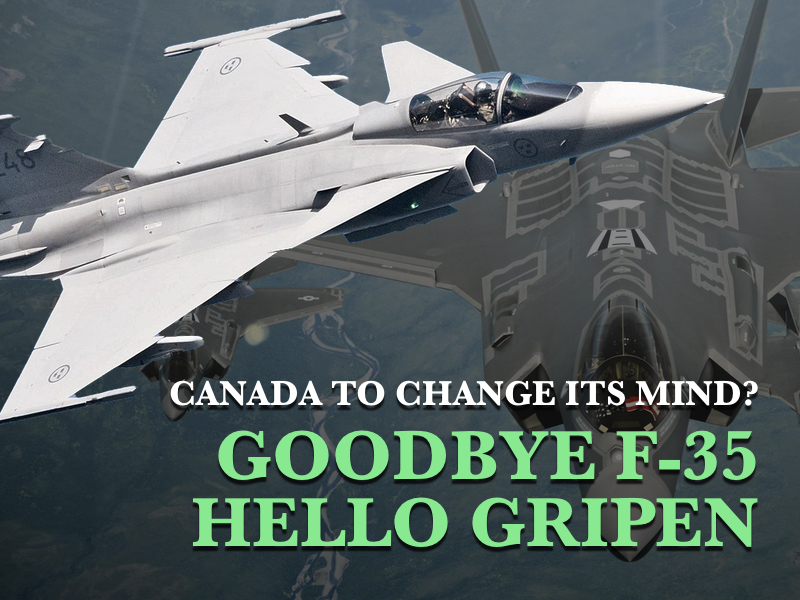
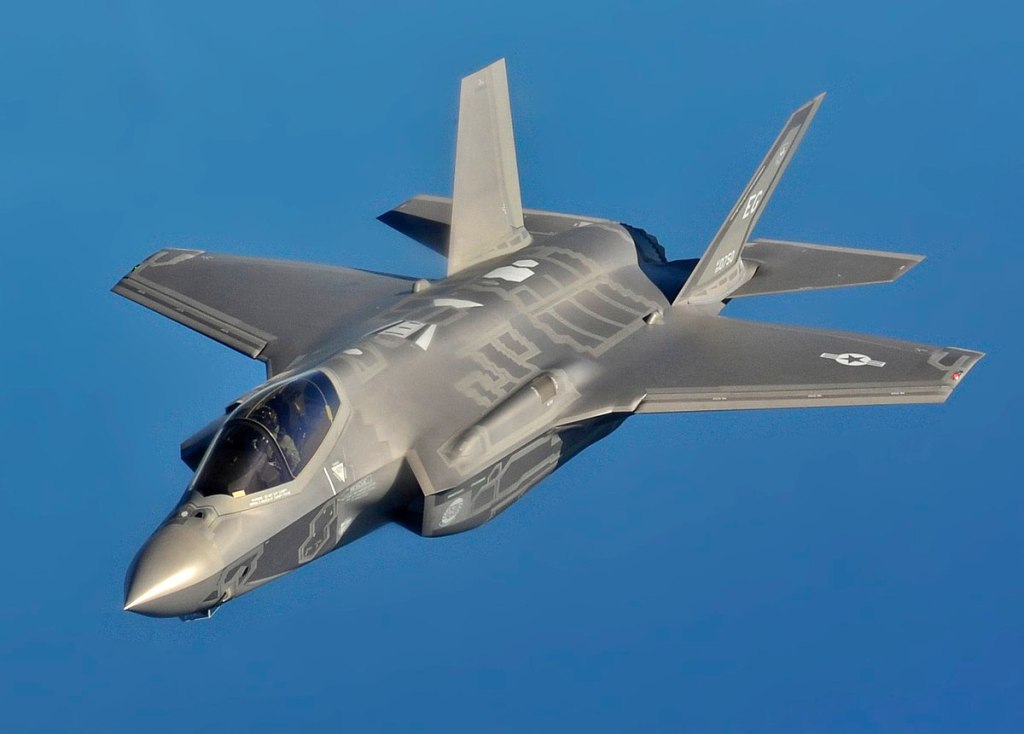
The Locheed-Martin F-35 is an impressive piece of technology.
The single-engine stealth fighter was identified as being an integral part of the future of the RCAF, or Royal Canadian Air Force. So much so that the government has moved ahead with the purchase of 88 of the creatures, with the first sixteen of them due to be delivered as early as next year.
This, as presently constituted, is the Cadillac of warplanes, and there’s a reason why Israel bought a truckload of them, because Israel has no choice but have the most formidable airforce in its neighbourhood, if not the best in the world pound for pound.
But there’s a difference between Canada and Israel then it comes to air power. Foremost is that the Israelis utilize a lot of attack missions, or offensive operations, in which the need for stealth — the ability to approach targets without being detected by enemy air defences — is absolutely essential. Often, as in almost always, the Israelis need to sneak through hostile and contested airspace to even get close to their targets, let alone return successfully from missions. The stealth package, therefore, is absolutely essential to their function and mission set.
Canada requires an attack capability as well, of course it does, but our mission-set is mostly air defence of our home territory and air superiority as part of a combined arms approach on the battlefield. While stealth is an important component to those tasks as well (hell, it’s never a bad thing to be invisible when you’re a warplane), it’s not as vital as it would be to our friends in Israel.
But in the F-35, we’d have it anyways, so what’s not to like?
Other than the fact that the F-35 is an American aircraft, and subject to our seeming vulnerability to American winds of change and volatility, and their unpredictability.
The F-35 is run through an onboard computer that Lockheed Martin will not allow source-code sharing, meaning that we, Canada, would be absolutely dependant upon another nation to operate the sharpened spear of our air force. That’s significantly problematic even in the best of times, but more so when the nation holding the keys has turned hostile on you.
This is an unacceptable strategic vulnerability. Especially with the Americans currently playing their new roles as chief villains, authors of vexatious villainy.
Canada is on the hook for sixteen F-35’s, and while there’s a need for significant infrastructure and training improvements, not to mention the specific maintenance regime, the Canadian government is seriously looking at halting the program right there in it’s tracks.
The F-35 is an extraordinarily expensive aircraft, due to its many complexities. And yes, economy of scale has made them less expensive, they’re still very expensive, and still extraordinarily so.
After much deliberation, research, shopping, and the kicking of tires, the government came up with a final shortlist of two aircraft as part of their overall procurement process. The F-35 Lightning II was one of them, while the Saab Gripen was the other.
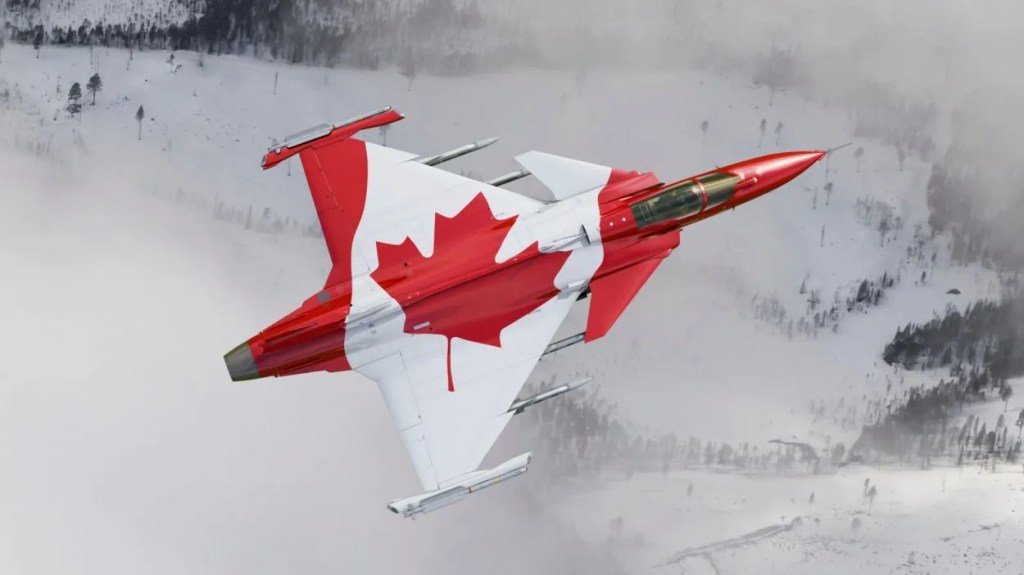
The Gripen is a Swedish warplane, from a place that makes quality stuff, and from a place that’s right on Russia’s doorstep. They’re a Nordic nation, a Scandinavian nation, and a nation that understands what it’s like to operate combat aircraft in a cold winter environment, more so than the F-35.
The Gripen doesn’t need all the stealth capacity of the F-35, since among the Earth’s fighter aircraft, there is none that can fit the role Canada needs better than this one.
None.
The Gripen’s also a single-engine offering, but has an increased range and better battle radius than the American competitor. It has a state-of-the-art computer package as well, and it’s radar suite is every bit as formidable. Plus it can pack a ton of missiles onto its airframe, meaning that when it shows up to the party, it has more knives to throw around.
There is no other aircraft in the world that wouldn’t be worried to know that a Gripen, or a flight of Gripens, was in the area. You would be a fool not to be.
It can land on a highway, a secondary highway, a rural road, perhaps even a driveway of some length. It can be refuelled and rearmed in less than ten minutes for a rapid turnaround rate that no other fighter can match.
And t’s far less expensive than the F-35, or even any of the European competitors.
So why didn’t we pick these in the first place, then?
For one, the F-35 is the plane everyone’s buying, including many NATIO allies. It’s interoperability is impressive, as it would share everything that all other F-35s from other countries would have and need, including ammunition packages.
Plus, and you have to admit this, it’s sexy as hell.
But the real reason, the number one reason, is that this was the aircraft the Americans wanted us to buy, because it helps pump up a key sector of the American defence industry. So the Americans bullied us, like they always do.
Remember the Avro Arrow, that Canadian super-sonic fighter of the late 1950s that was generations ahead of anything the United States was building at the time? There was no way they were going to let Canada have a superior fighter to themselves, so they put pressure on the Diefenbaker government to capitulate and scrap the entire program. And so they did.
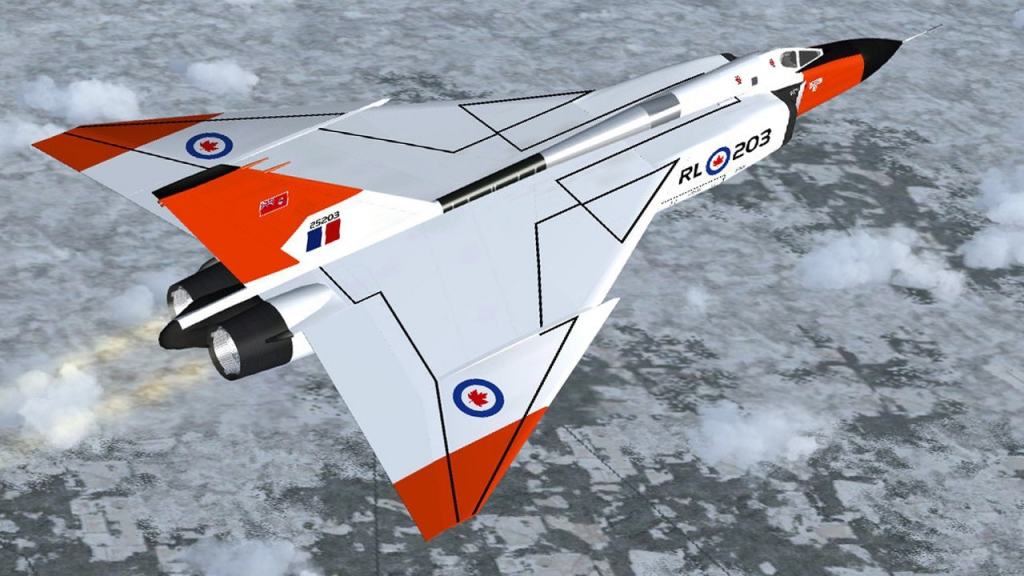
The engineers and technicians behind the Arrow all headed down to the States where opportunity lay after the destruction of program, the planes, and the prototypes. The latter two items were chopped up and thrown into Lake Ontario. The plans and specifications disappeared. And several years later, mostly due to those Canadian engineers that headed south to pursue their work, the Americans unveiled a prototype of a new aircraft, the venerable F-14 Tomcat, of which some are still flying today, only in Iran.
The Americans killed our program, took our engineers, and destroyed or stole our plans, just so that we wouldn’t have a better warplane than they would.
A bunch of kids. With a lot of money and influence. But kids nonetheless.
Well, now we’re kind of angry at the Americans, mostly for the economic war they’ve declared on us, shape-changing from our best friend and neighbour to an existential antagonist that can’t be relied on or trusted.
So we don’t have to be bullied by them anymore. So we can buy whatever the hell warplane we want.
So back into the conversation comes the Gripen, as I said made in Sweden. The Swedes, despite their Viking past, haven’t been an invading, killing, looting, hell-bent on murder country for at least a few centuries. In fact, until last year when they joined NATO, they have studiously maintained a position of neutrality in European conflicts, a sort of Switzerland North. But unlike the Swiss, who live atop a mountain and watch reruns of The Sound of Music, the Swedes have to take their defence seriously, as they sit astride a couple of key strategic geographic areas, like the Baltic Sea, the near Arctic, and being a stone’s-throw away from Russia, just across a strip of Finland. With Putin’s latest aggression, Sweden, like their neighbour to the east, Finland, have decided to join NATO.
Nobody else within NATO flies the Gripen, although I may be incorrect with that, since Bulgaria or somebody like that may have some. And Portugal is buying them, cancelling their own plans to purchase the F-35. Other than that, it’s Brazil and Thailand that have the most significant fleet of them, and it’s not like we do a lot of co-operative defence with either of those two places.
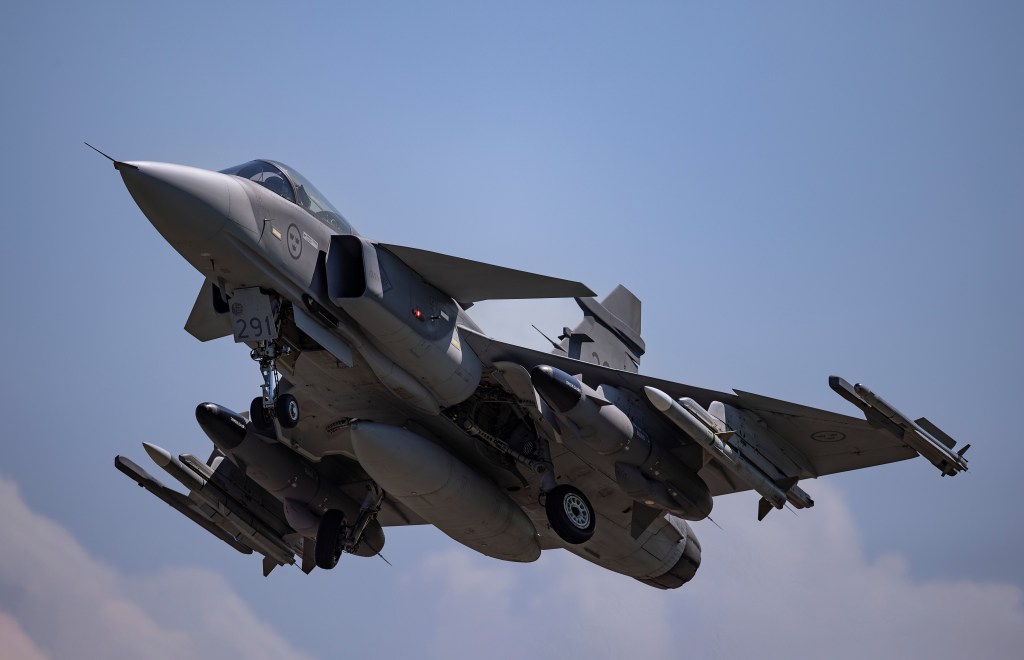
The Gripen is totally inter-operable with all NATO aircraft and munitions, purposely so. As a nation, they may have been neutral, but that doesn’t mean the country doesn’t have enemies, and it shouldn’t surprise anyone that Sweden’s primary threat, its primary enemy, is Russia.
So, if we purchase sixteen F-35s and their support structures, that means we’re not spending the money on the rest of the intended 88 plane fleet we were considering, meaning that if we don’t go ahead and purchase the remaining 72, those dollars could be re-directed towards the Gripen. Because of the price differential, that may represent a fleet of some 100 Gripen aircraft, perhaps making it the largest fleet of Gripens in the world, including Sweden.
Another thing.
Saab has committed to a complete and comprehensive share of technology, unlike the Americans, who always want to hold the trump card for themselves. And Saab will build the jets right here in Canada, with Canadian workers and Canadian jobs, creating an economic spin-off the Americans are too reluctant to provide. And the plane isn’t as moody as the F-35, meaning it doesn’t have the same maintenance needs a Lightning II does.
It’s less expensive, by far, to both operate and maintain. Less difficult to train on. Less temperamental. It can network with other aircraft and drones, just like the F-35 can.
The only item it lacks is stealth, but the Swedes don’t have the budget for that. And that said, it’s not as if a Gripen shows up in contested airspace with disco lights flashing, it just doesn’t have the special paint and other stealth accoutrements. It also doesn’t store its weapons in an interior chamber, but rather carries them into the fight under its wings. Because of this, it can carry far more ordnance that the American craft, which is limited by its size and the size of its weapons bay.
The Saab Gripen, in its latest variant package, is second to no other aircraft on the planet. It’s effective, flexible, maneuverable, and lethal. And it comes without limiting tethers imposed by the government of the nation that’s selling it.
An RCAF with an offensive/defensive capacity represented by 16 F-35s and 100 or more Gripens would pack plenty of punch, more than most countries, and certainly more than competitive with any of our allies and superior to our potential adversaries. It would give us a gap-free mission capability, with each aircraft operating according to its strengths.
This is a sound move under any circumstances, and now that we’ve freed ourselves from American pressure, we can procure an airforce superior to the one that we would have had we exclusively bought the F-35.
If there’s silver lining to this whole charade of Trump nonsense, this may well be it.
 NEWSMAGRENFREW