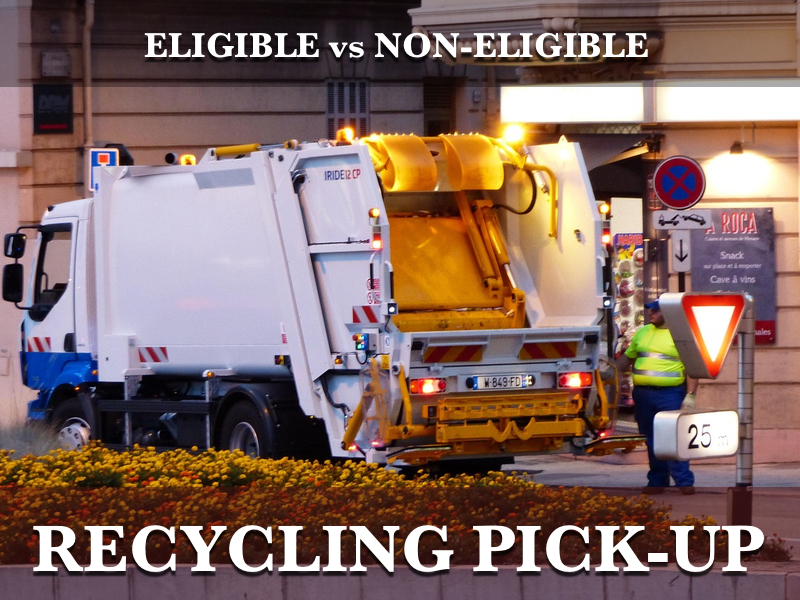
In a lot of things, there’s what we once did, what we do, and what we’re going to do moving forward.
I guess that statement seems to be a reflection of the fact that time doesn’t stand still for any of us as people, and it works that way for municipalities as well.
It’s the old “once we finally get things figured out and solved, something happens to change it” thing. It’s like you finally master your online banking interface, but then they change it to make it “better,” which of course means making it better for anyone not named you.
It’s like that in the garbage business, and by extension, the recycling business.
What was once a Stewardship Model has been replaced by government regulations changing things to a Producer Responsibility Model, which to most of us means next to nothing but to a municipality awash in recyclable materials, as they all are, it means quite a bit in terms of compliance, planning, re-jigging what had already been jigged, and then paying for the whole damned thing. The new regime takes effect on January 1, 2026.
If you thought there was two types of recycling, then you were right. Nothing’s changed in the mixed co-mingled and fibre distinctions, the big choice you have to make once a week when you’re trying to remember which blue box you’re going to lug out to the curb. A blue box full of stuff at the end of the day is usually your answer as to whether you made that choice correctly.
But now there are two other distinctions to recycling, eligible and non-eligible. And so the question arises, what makes eligible eligible?
As simply as I possibly can, things can be broken up into two categories, residential and commercial/institutional/industrial. The first group, residential, is considered eligible, as in edible for continued curbside pick-up, meaning the least amount of change brought by the new government regulations. The second, the businesses and industries that make up the commercial/industrial category, are no longer eligible for this level of service unless the municipality in question decides to take on that additional cost.
Poor Renfrew. To be saddled with eye-watering debt, cutting or reducing services, increasing property taxes, and now some other gawd-awful thing raises its stupid head to demand more financial resources that you don’t have. It’s a spend-more scenario in an environment of spend-less. It’s enough to make any councillor reach for that forty-pounder of rye they’ve been saving for their child’s Confirmation and putting a tangible dent into the thing. They should just go ahead and pass a bylaw allowing councillors, and only councillors, to drink alcohol during council meetings, just to take the edge off things and steady the hand on the tiller.
Currently, Renfrew makes 319 stops that will now be considered to be non-eligible, including every one of the places operated by the town itself. This is currently done at a rate of $15/stop, but you can be guaranteed that a price like that is on its way out the window. It’s these places that are going to be the problem.
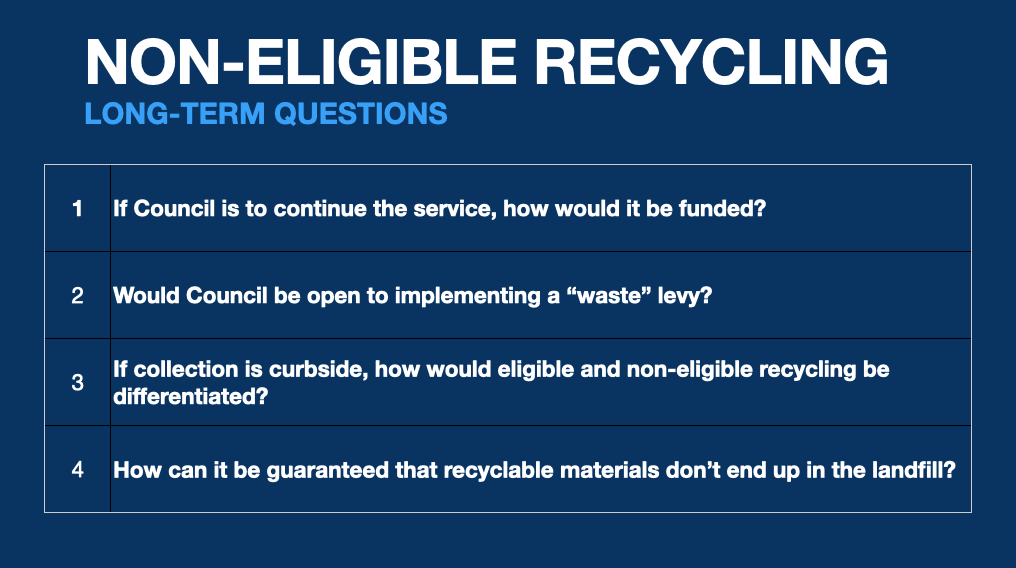
If Council were to determine to continue picking up this stuff from these stops, what would that entail? What would that look like? How would it be funded?
Staff has already undertaken a brief survey of the battlefield, and found that some municipalities are already on the road to compliance, as Renfrew is, but have adopted styles unique to themselves. Some continue to pick it up, and others put the responsibility on business owners themselves to get their recycling to a depot specific to that purpose. In one case, in Mississippi Mills, the municipality was quoted a sobering $65/stop for the service, as compared to Renfrew’s current yet soon to be extinct $15/stop. It’s more than a four-fold difference, but Manager Amanda Springer is of the opinion that whatever cost eventually accrues to Renfrew, it’ll be less than the Mississippi Mills quote. So some small solace there.
The decisions facing Council are those of a short-term nature, and of a long-term nature.
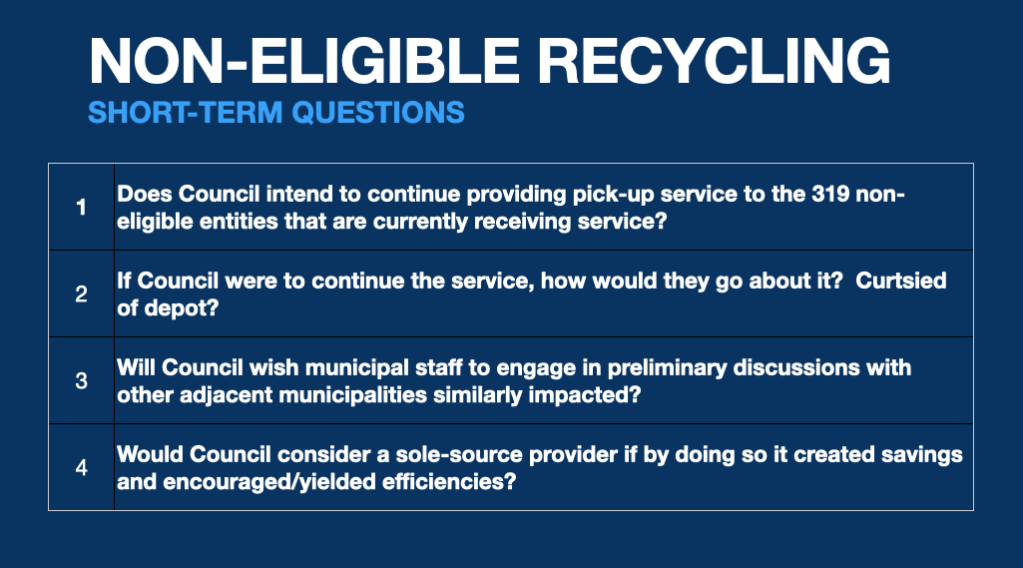
Councillor McDonald asked if the ineligible stuff could be limited to a downtown pick-up service, where I suppose the rest of the non-eligible types can just go pound some sand. Manager Springer noted that Smith’s Falls does this, but she was of the opinion that any savings hoped for from such a partial service, including Raglan Street, O’Brien Road, and Stewart Street corridors, would be negligible.
She also noted that the eligible and non-eligible stuff can’t be co-mingled, so they’d need either a split-truck that would separate the two, or another truck completely dedicated to the task of non-eligible. And there’s also the problem of Raglan Street where upstairs apartments are classed as residential and therefore eligible, but the ground floor is occupied by a business that is designated as non-essential. And how do you tell who’s who and what’s what? Sure, companies can endeavour to train their employees at identifying which is which, and you can back that up with audits, but human compliance with just about any rule or expectation is a tenuous thing.
Can we rely on business/institutional/industrial concerns to be responsible enough to faithfully get their recycling to a provided depot? I guess about as much as we can trust anybody to do anything that they’re supposed to do, especially when it entails inconvenience and additional expense.
Manager Springer is hoping to engage with an economy of scale approach by opening discussions with adjacent municipalities who are faced with the same challenge. Right now, Miller Waste is the primary contractor for Circular Materials, the company that currently handles this stuff for Renfrew. Miller also performs the same task for other municipalities, so if Renfrew could gang together with some other places, it could possibly yield reduced costs and increased efficiencies. She’s hoping Council will provide her with informal direction to investigate such a course of action. It would, however, entail the municipality going to a sole-sourced model with Miller to take advantage of any of these potential benefits, and I believe that would require a by-law change of some sort, because you can’t tie your goddamned shoes without a by-law telling you that you can. It’s why loafers are so popular in town.
Springer indicated that it would be good for Renfrew to also have discussions with impacted businesses through the Chamber of Commerce and the Business Improvement Area. These discussions will provide information as to the thoughts of businesses as to how they feel things should proceed, and even if they’re willing to help pay for the service through grant monies that may only be available to them through their organizations.
One way or another, the times are changing, and it’s hard to keep up. But if you’re a business/institution/industry in Renfrew, they’re going to be changing even more and you’re going to have to respond. Either that or start planning on how you’re going to disguise your recycling so as not to fall into the jaws of a new expense. All neighbours of all business owners may have to hike their environmental vigilance. If you see your neighbour’s recycling suddenly exploding out of control, we may have somebody trying to stickhandle around the new regulations.
I’d get into potential compliance and enforcement schemes, but that would likely cost additional money, so I won’t.
Enough damage for one day.
 NEWSMAGRENFREW