There’s no doubt that there’s a seismic shift towards the purchase and operation of electric vehicles — EVs — in the North American market, and that includes us right here in Canada.
Where once you would see none, or very few, now the sightings of EVs, predominantly Teslas, are far more commonplace. And with government subsidies and climate-specific legislation, that will become more of a fact moving forward.
Unless you plan on buying a Tesla in the recent climate of economic warfare foisted upon us by out erstwhile friends and neighbours to the south. That’s something that might be politically and, and now economically, difficult. Especially since all political parties in this country are bound and determined that, if government incentives are to ever be reinstated, that Tesla would not be covered in the program.
But never mind Tesla, let’s look at electronic vehicles generally.
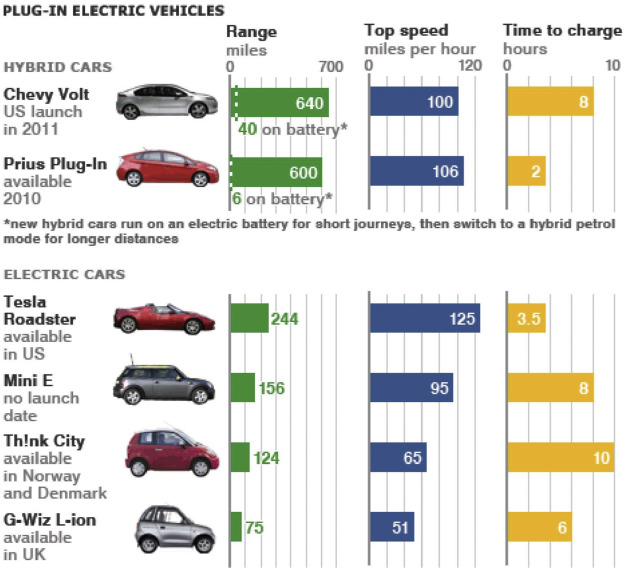
First, there’s no doubting that you can’t beat the gas mileage, mostly because of the absence of gas. An electric motor, as you already knew, runs off the power provided by a battery, and a fairly large one at that. So in terms of operational savings, the electric vehicle is going to be a better investment in the long run. But perhaps surprisingly, EVs absolutely suck in some areas, specifically in the long run, and by that I mean trips involving extended range.

It’s not uncommon now for some of these EVs to have ranges of 450-500 km before the need for a top-up, and that’s fabulous, especially with those ranges steadily increasing in distance. But we also know that access to charging stations is imperfect, charging speeds differ, and not everyone has an at-home charger due to the expense. Add to that the inescapable fact that driving range is compromised, or diminished, by cold weather, particularly anything that involves a temperature of -7°C or lower. You may be aware of the fact that temperatures in that range are a reality in a country like Canada, where -7°C is regarded as a balmy day during the winter months.
So there’s that.
But have you given any thought to running the heater to warm up the interior of your car? Because your heating system in an electric vehicle isn’t run by the motor as in a combustion engine, but rather is powered by the battery itself. This, added to the decreased battery charge/range that’s part of regular winter operations, and you’ve got yourself a bit of a problem in the works. Meaning that winter driving, including a heated cabin, is a logistical problem if you’re taking a trip to anywhere outside of where you happen to live. Winter and cabin heat alone are responsible for you losing 50% of your battery charge in a hurry, reducing your distance range to about half of what it might be in the summer, that is if you don’t use your air conditioning, which uses even more battery power.
So 450 km of range can turn into 225 km pretty quickly. Which is fine, I guess, if you happen to know the location of all the chargers along the route. But unlike filling up with gasoline, those chargers can require you to be plugged in for a minimum of 40 minutes, and that’s just to get you to a 50% charge. A full charge, depending upon the charger, can take a couple of hours. And that friends, is a pain in the ass, no matter your positive impact upon the climate.
As alluded to, it works the same with your air conditioner.
Yes, Canadian winters are cold. But now, with climate change, Canadian winters are hot, often brutally so. Air conditioning is, then, a necessity for survival, and there are virtually no cars of any type that come without it. But in an electric vehicle, your AC is even more of a drain on the battery than heating your cabin in the winter.
That’s because of the number of processes, and conversions, that have to take place in order to take the air generated by the battery and cooling it so that it can be pumped out into the cabin. So now you have condensers and dehumidifiers that have to be included and engaged. And as I said earlier, all this has to be pulled from the battery.
I would love an electric vehicle, especially in a drag race, where you leave all the Porsches and Meseratis standing still at the start line. But after that, and the silky smooth silence, there are some legitimate concerns about how the operation off basic standard features can be such a draw on the power supply, and something that requires some methodical planning if you’re taking a trip anywhere farther than your local Dairy Queen drive-thru. And as for the silence, some EVs actually pipe in fake road noise to provide their drivers with that familiar sensation, which some of us appear to be lost without. And that road noise, like everything else requiring power, draws from the battery.
A gentleman at a restaurant was engaged in some light conversation where it was revealed that he’d be travelling to Ottawa from Sudbury to bring a new vehicle there and swap it for another new one coming back. He recounted one trip where he picked up a Tesla in July.
The dealership giving up the Tesla advised him to not run the air conditioning on the way back, despite it being a typically hot day. Of course, he asked why.

He was told that if he did, it would add significant time to his trip home as Sudbury falls just outside the typical range of a Tesla on full charge. With the air conditioning eating into the battery, he was told that he may have to stop to re-charge at least twice on his way back. So a 5-6 hour straight trip becomes an 8 hour straight trip, depending on the charging speed to get to a full charge.
Travelling to Sudbury is always an iffy proposition, mostly because it’s Sudbury. But having to take eight hours just to get there is a lot for a person to endure, and for a prize that’s not much of a prize.
From Ottawa, eight hours of driving with a gasoline engine gets you to a lot of places, like the Maritimes, Cape Cod, most of New York, even eastern Michigan. It can get you a good chunk of your journey to Florida. But with an electric car, eight hours buys you Sudbury.
All scientific specifications aside, that last point right there might be the most sobering.
 NEWSMAGRENFREW