We keep putting him back up, and they keep knocking him back down.
We are the people of Ontario, as represented by the government of Ontario, and as driven by the premier of Ontario, meaning Doug Ford.
They are the people who protest the things that we do, and show their displeasure through paint attacks, graffiti, and pushing things over, even smashing them when possible.
The him is Canada’s first prime minister, Sir John A. Macdonald. Actually not Sir John in the flesh, because he’s long dead, but a bronze statue of him, this one in a prominent position at Queen’s Park, the location of our provincial government.
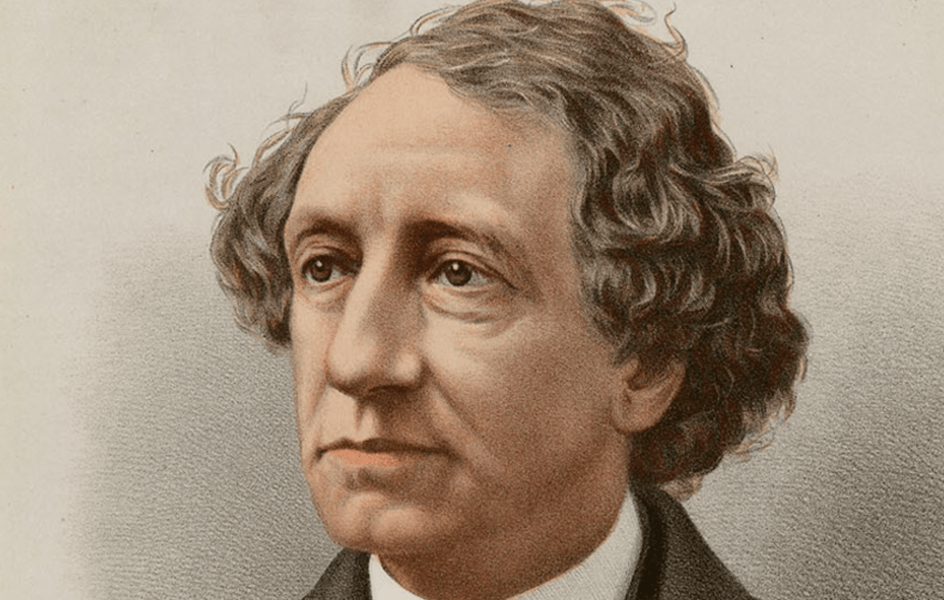
John Macdonald is a complicated historical figure, as many of them are, but he happens to be our complicated historical figure. But all complications aside, no one person, no one man was more responsible for the creation of Canada as a country than Macdonald, although you could throw some other influentials into the mix, primarily George Brown, Georges-Etienne Cartier, and Thomas D’Arcy McGee. But of all the so-called Fathers of Confederation, it was Macdonald, the inveterate socializer, who stayed in his hotel room while his compatriots danced and drank all through the lavish balls that were part of the Quebec Conference. And in that hotel room, with the assistance of his trusty bottle of scotch whiskey, Macdonald drafted what would eventually become the British North America Act, the founding constitutional document of our nation, and a document still in force today. Perhaps most noteworthy were Sections 91 and 92 of the that document, the separation or division of powers between the federal and provincial governments, an area of critical importance and continued relevancy today.
If anyone deserves to have a school named after them, or have their name on a mountain or airport, or have a statue erected in their honour, it would be John Macdonald.
But life can never be that simple.
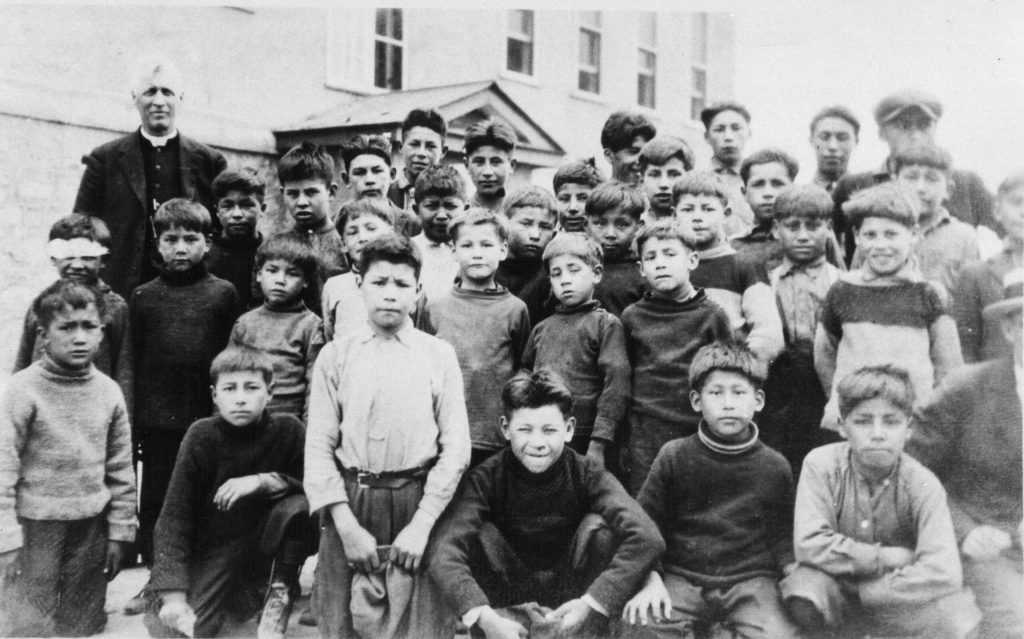
Most protesters are angry about his participation with, and implementation of, Native residential schools, something he definitely had a part in, and an inescapable part of our Canadian history. And as Canadian as I am, proud of the nation and its flag, the son of two World War 2 veterans, and nephew to no fewer than seven uncles as combat veterans, I still refuse to turn a blind eye towards those schools and what happened in them. As a history enthusiast, I don’t have the luxury of conveniently overlooking things that run contrary to the preferred historical narratives.
But that’s what history is, an accumulation of the stories and events from days gone by, often with shady and unscrupulous characters involved. It is, quite frankly, what it is, the good and the bad, for better or for worse. In short, I can love my country while still recognizing that it had its less than appealing moments.
I’m angry with John Macdonald for another reason, also having to do with the indigenous population of the country, particularly the nations of the Canadian West, or prairies.
Those First Nations agreed to treaties whereby they would give up land in exchange for various items of consideration from the federal government. Primary among those federal considerations was the promise of food, the number one priority all peoples, with Canadian Natives being no different. The government promised that, when times were bad, and food became scarce, it would provide food to the reservations to support the populations living there.
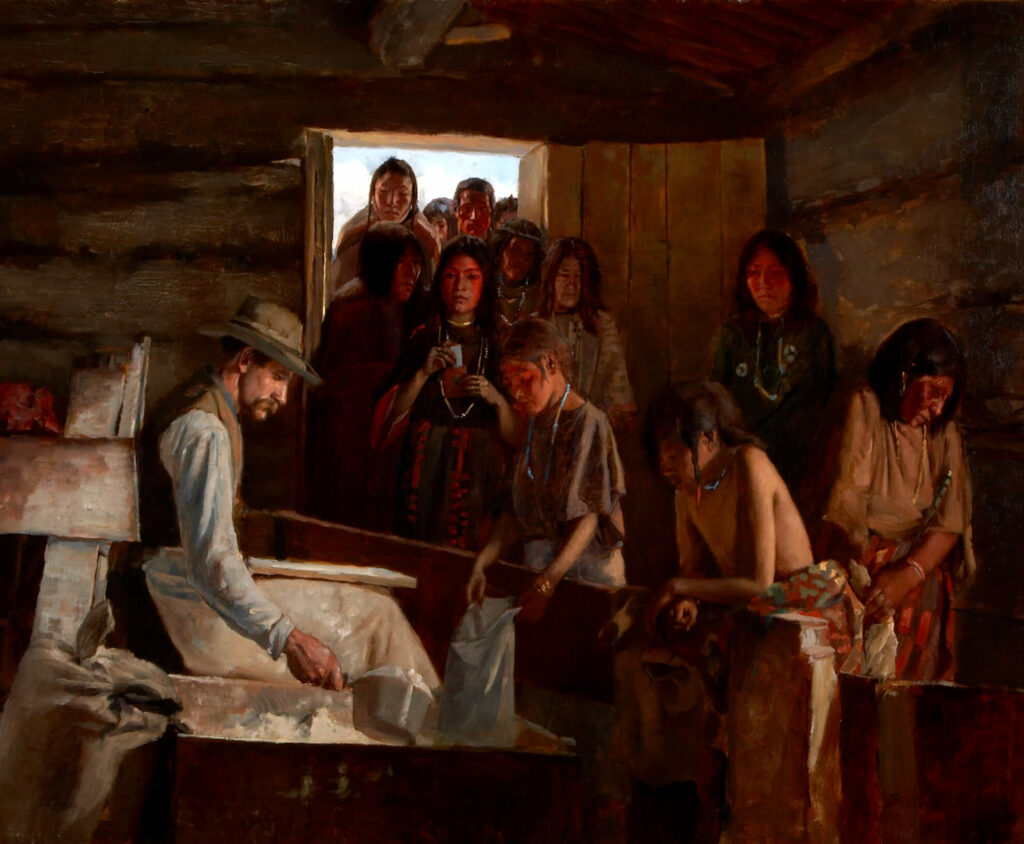
And times were indeed bad, and food was indeed scarce. And the federal government reneged on this promise, the federal government led by Prime Minister Macdonald. And the Natives died of starvation, in their thousands, for one simple reason. Macdonald didn’t like how much money it was costing. So he, and everyone else, just sat back and watched them die, because the thinking was that with all the Natives dead, we could take control of the reserves as well, not to mention being rid of a major “nuisance.”
This illustrates a fundamental difference between us and the United States when it came to “dealing” with their respective “Indian” problems. The Americans shot their aboriginals, whereas up here in Canada, where we’re not so barbaric, we starved them to death.
Not once ever, after an entire career of teaching Canadian history, did I ever come across another history teacher, of any jurisdiction, who ever presented that fact to the students before them. Not once. Because if a textbook doesn’t mention it, it never happened, which of course is lazy teaching. It’s not that today’s Canadian youth prefers to be ignorant of the story of their country, it’s that their very own teachers are often unaware of it themselves. You can’t teach what you don’t know, I suppose, although I do believe there’s some sort of requirement and obligation to go find out.
So I suppose I understand why it is that people keep defacing the statues of John A. Macdonald, mostly for the residential schools, but for me also the intentional starvation of the native population of Western Canada. It makes me wonder why it is that these history warriors aren’t paint-bombing Catholic, Anglican, United, and Presbyterian churches. Residential schools may be government policy, but it was these Christian denominations that implemented it, or executed it, depending upon your point of view. These so-called People of God, yet absolutely far from it, inflicting their dogmatic cruelty upon innocent and defenceless children. Shame on every one of them. There’s no God I know of that’s going to lift people like this up on eagle’s wings and have them soar anywhere. And it stands as yet another example of how people perverting God can cause an incredible amount of human damage to God’s people, all his people, including Native children.
Defenders and history apologists claim that we have to view historical figures through the lens of historical context, that people ought to be judged through the perspective of the times in which they lived. It’s a fair point, but not a winning one.
There is no doubt that Macdonald was not alone in his thinking with respect to the indigenous population. Racism was rampant in his time, and it wasn’t just the so-called Indians, but was also directed against the French, Irish, Chinese, Indian (as in from India), Mennonites, Doukhobors, Poles, and Ukrainian populations. It was also a time when women had no rights, and children even fewer. The only people worth anything were white, English, Christian, and often drunk, men.
So is that the contextual lens through which I should be viewing this? The one that says that those were just the times, and Macdonald was the product of his times, and that the times were abysmal for many, brutal for others? Is that my historical lens?
Sorry, but I live in different times, and these are the times where we’re debating and arguing, one way or another, about whether or not these statues continue to stand. In my times, there’s a certain standard of acceptable behaviour, and an understanding that people have value, and they have rights, and they ought to be entitled to those rights. That we, as a nation, ought to defend those rights, at whatever cost, rather than make excuses for people who transgressed those rights over a century ago.
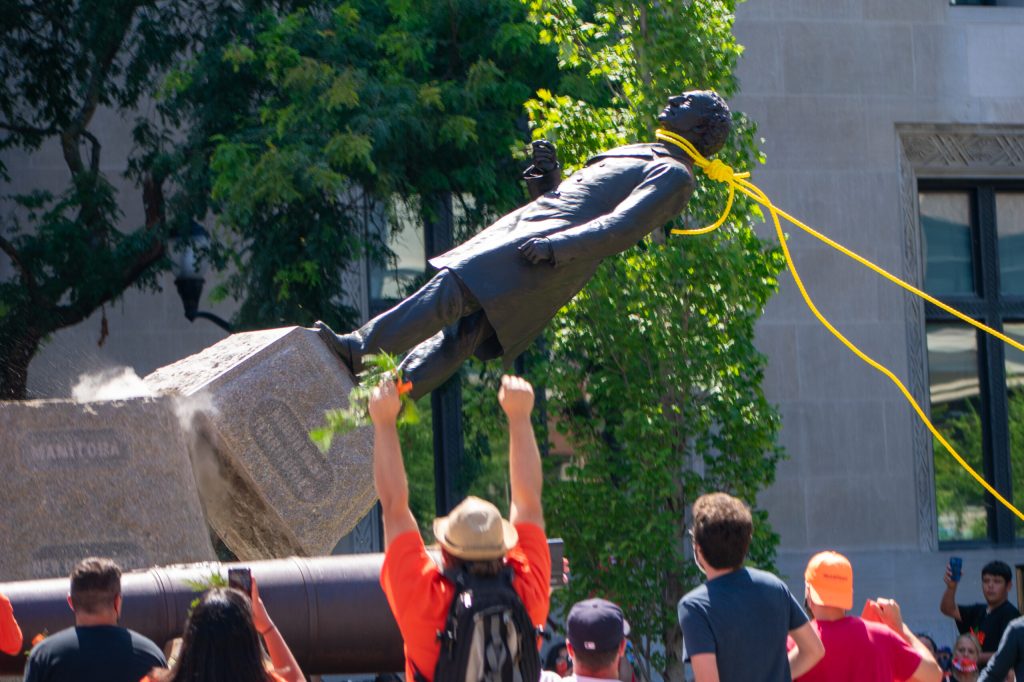
I believe the Macdonald statue should stand, albeit with something present that articulates a more complete telling of the man’s story, including the bad parts, and despite the historical context. If they come and knock it down, or deface it, then maybe we should just leave it knocked down and defaced. It may not be pretty, and it may offend some, and it would definitely detract from the pristine beauty of Queen’s Park.
But by God it would be real.
An upended statue on a lawn down in Toronto should be one of the least of our concerns. And honestly, is there a more poignant telling of the complete story of John Macdonald?
In Westerbork, Holland, there are train tracks that have been ripped up and are just sitting there, upended, as part of a Holocaust memorial. Westerbork was the terminus of a rail line where Dutch Jews were assembled and then trundled aboard box cars for a journey to Auschwitz, the Nazi concentration camp where certain death awaited. The Dutch, after being liberated by the Canadian Army, went about creating a memorial park to commemorate what had happened there, something that was no means an attractive story, as there were many Dutch collaborators who had turned in their fellow Dutch, albeit Jewish, citizens. White-washing their history wasn’t the intent, and the Dutch wished to tell the entire story, including all the warts. And so these railway ties are terminated, ripped up, and left in the Dutch sun, a tangled eyesore of twisted metal, but one telling a story of twisted humanity.
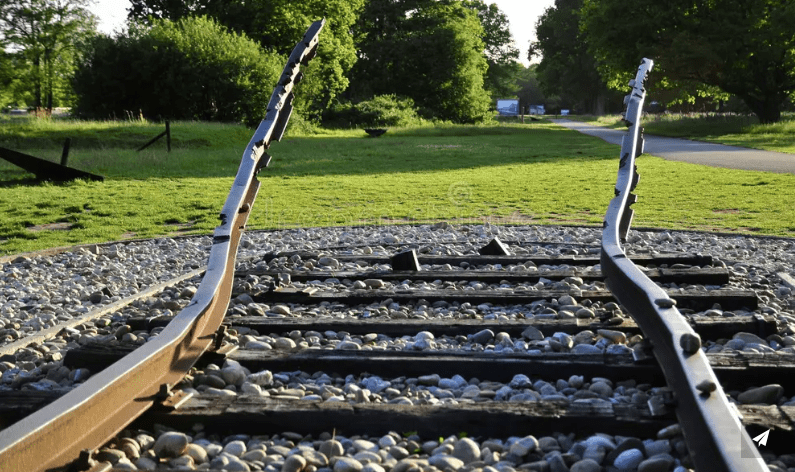
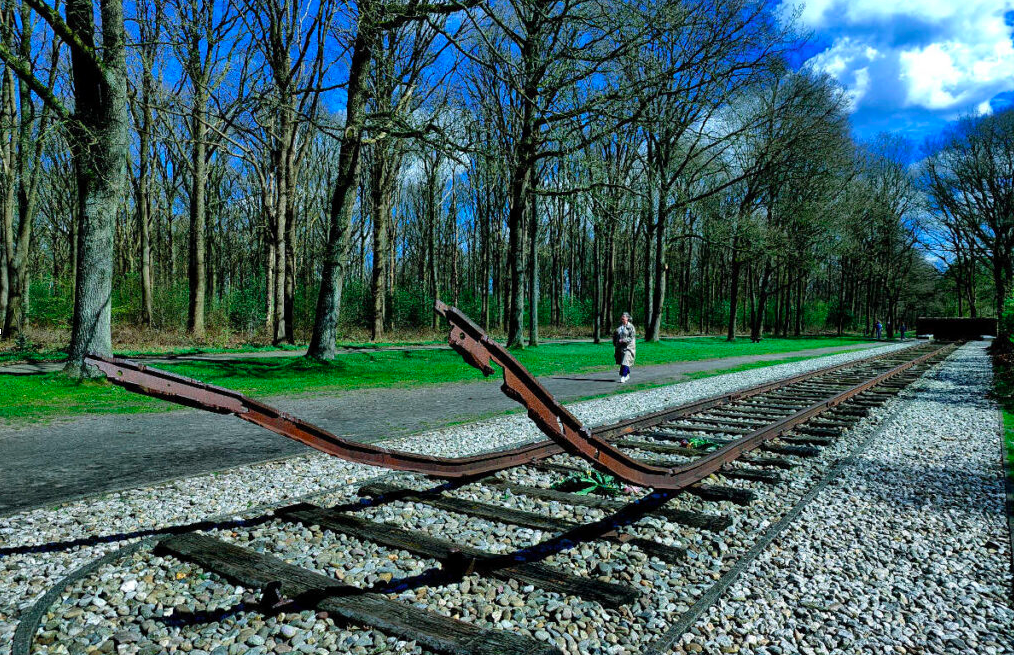
Sometimes the historical truth is not a pretty sight, and that display over in Holland is an example of a proud people unafraid to tell their story. A topped statue in downtown Toronto shouldn’t really be all that different. Despite the unsightliness, that statue will be telling an important story. Children walk past statues all the time without a thought. But a toppled one will almost always elicit a question as to why its laying there like that.
We can only hope that the adults present have what it takes to properly explain it.
 NEWSMAGRENFREW