
Use it or lose it.
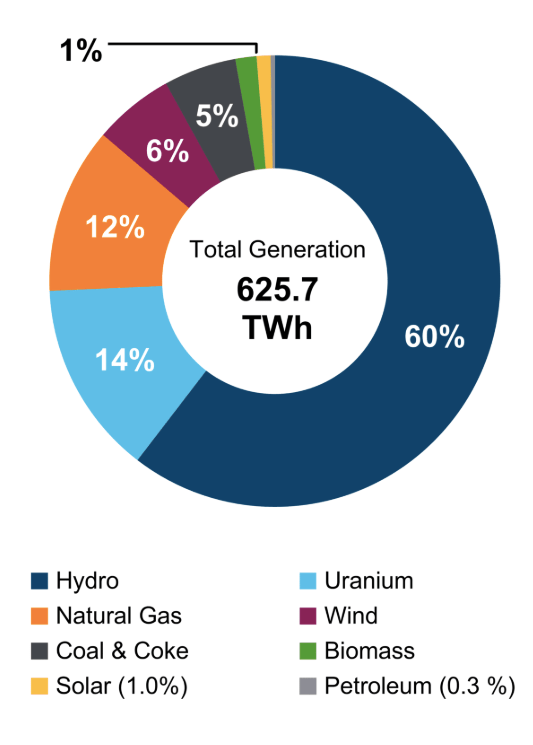
There are any number of situations or circumstances where that expression is credible, and one of them seemed to be the generation of electricity, whether that be through hydro (water), nuclear, natural gas-fired, or coal-fired. Regardless of the means of generation, electric power has storage problems that raise the possibility of having a valuable, albeit renewable source of energy being wasted if demand falls short of generation.
Calling electricity a renewable resource makes it sound like it’s clean energy, and there’s no reason why that can’t be true. Hydro-electricity is about as clean as you’re going to get, but it has limitations in terms of its dependence upon sources of moving water, as in rivers, and the enormous costs involved with the construction of generation dams and the lines of transmission that convey the electricity generated to the markets where it will be consumed.
All well and good.
Nuclear generation is clean as well, except it’s nuclear, and people lose their minds over that word, probably because we’ve watched too much of the Simpson’s and attach a lot of societal weight to the argument that nuclear generation plants are bad because, well, they’re nuclear and that raises the spectre of radiation leaks. It’s not an argument without merit, since any of us alive back in 1986 can remember the Chernobyl disaster In Ukraine. But that should be regarded somewhat as an outlier in that, back in 1986, Ukraine was firmly entrenched within the former Soviet Union (aka Russia) and historical and traditional Russian incompetence probably had as much to do with that disaster as anything else. Perhaps another case of careless smoking.
Gas and coal-fired generation plants have only one redeeming feature, and that is that they produce electricity. Everything else about them is bad, in terms of environmental impact and their influence on climate change through carbon emissions.
Sure, there are a lot of people around who view this as some sort of hoax, that burning carbon has no impact on the environment , or that global warming is something cooked up by Bill Gates, or some other lefty screwball socialist, so that they can wage war on the oil and gas industry. Which is, in its own right, just another way of saying that there are a lot of very stupid and wilfully ignorant people walking among us.
So long as the oil and gas industries maintain their stranglehold on energy production, and by extension the generation of electricity, we’re going to be facing additional assaults upon the natural balance of things up in our atmosphere. And this will continue, despite all the damage that those industries are responsible for, until the time comes when those very same companies manage to insert themselves fully into alternative sources of electricity generation. In other words, they’ll do everything possible to delay the implementation of action leading to cleaner energy sources until they find a way to dominate those industries as well. You see, for these people, the ones running these companies and the lobbyists they employ, will always put their own profit above the well-being of the planet, and by extension, us.
That’s why other sources of electricity, like wind and solar, have had such a tough time elbowing their way into the discussion, mostly because they’ve been under-cut and demeaned at every opportunity by Big Gas and Big Oil, and the politicians who make a living and a practice of sucking on the corporate teat. You may read into that many Conservative politicians, and most of the people and politicians in a place like Alberta, the province most in need of a game misconduct.
In a place called Nanticoke, in Ontario, coal was used as the primary fuel to generate electricity, something that had been going on for years until the province eventually shut the place down, partially because of pressure from American states living downwind of the plant that were watching their trees dying due to the crap that Nanticoke belched into the air in order to provide electricity to large swaths of Southern Ontario. In fact, Nanticoke produced some 15% of Ontario’s overall electricity needs, despite the fact that it was the tenth largest producer of harmful greenhouse gases. In fact, in 2001, it was the number one producer of such gases. The place was finally shut down back in 2013 when the Ontario government finally pulled its head out of its ass and shuttered it because it was too “dirty.”
That same government spent billions of dollars to get involved with the South Korean industrial giant Samsung to begin the process of purchasing, construction, and installing wind-powered generating equipment so that Ontario could then leverage itself as a leader in the generation of “clean” energy, or clean electricity. But that effort was sabotaged by a whole host of barriers, including lobbyists representing current producers, opposition Members of Provincial Parliament (who would one day be government members), people and municipalities suffering the effects of NIMBYism — NOT IN MY BACKYARD — and the full gamut of climate change deniers.
And so the government chickened out, and started to withdraw from the Samsung deal, meaning that a bold initiative was brought down by the efforts of those with a vested money interest in the status quo. Because, as I know you know, money is the most important thing in the world.
Today, there’s something happening on the old Nanticoke site which should provide the rest of us hope, that is the rest of us who don’t own stock in oil and gas companies.

Two indigenous groups from Southern Ontario, the Six Nations of the Grand River and the Mississaugas of the Credit River, have banded together to become majority partners in a major effort to produce electricity at the same site as the old coal-fired plant, except this time it will be with wind, and the associated turbines.
The major difference this time around is that the group partners have made an effort to understand the properties of electricity, the storage issues associated with it, and took a hard look at what they might be able to bring to the table.
And so along with their wind farm, the partners also created a battery farm, in that excess electricity generated at the facility can be stored onsite, then fed into the transmission system when needed. In other words, no wasted electricity. And no polluting emissions.
Imagine. Somebody came up with the idea of a battery farm right next to the source of generation and the transmission lines that get electricity to market.
And, in what probably qualifies as another wild twist, the project is under budget and ahead of schedule. Like that ever happens.
The project is well-situated in that it can take advantage of existing transmission lines and is close to several major users of electricity on the provincial grid, including the two biggest, the Imperial Oil Refineries, one in Hagersville and another in Sarnia, and the Stelco steel mill in Hamilton.
The Oneida Energy Storage partnership is not done, with plans for another similar complex, an even bigger one, to be put in place in nearby Hagersville.
 NEWSMAGRENFREW