Some might characterize it as being taken to task. Others might say it was more like being taken to the woodshed.
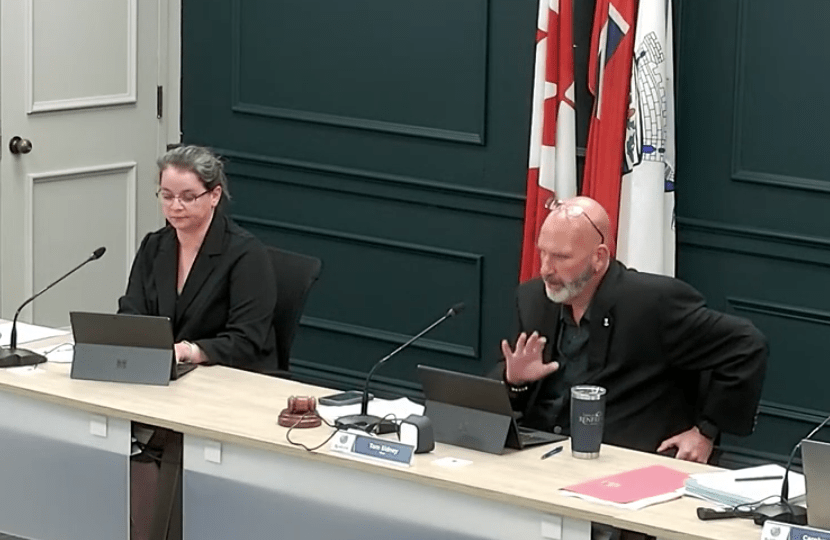
Whatever your choice, it amounts to pretty much the same thing, as the mayor (Tom Sidney) and the CAQ (Gloria Raybone) were both on the hot seat at the beginning of last Tuesday’s meeting of Renfrew Town Council.
The accountability piece in question had to do with the mayor cancelling the scheduled Council Meeting for September 9, the reasons given at the time being there were too many questions expected to come forward, and the staff needed additional time to prepare responses for those anticipated questions.
The cancellation, or postponement of this meeting was met with exasperation, frustration, and even a little bit of anger as councillors wanted to know what lay behind the decision to postpone, and who made the decision. Yes, the postponement came over the mayor’s signature, but some were questioning whether he was influenced to make that decision by senior staff, like the CAO, and maybe even the Clerk.
Who was asking all these questions? What were the questions about? Since when do staff require an additional two weeks of preparation time when the expectation is that they know their files? And if information or detail escapes them, they might likely be able to capture it within a day our two. But nothing that requires an additional fourteen days. So if more preparation was needed, councillors wanted to know which director(s) needed all this additional time.
There were some pointed questions as to whether a Facebook post by Councillor Kyle Cybulski was the impetus for the decision. Because if so, a number of councillors indicated that they saw absolutely nothing wrong with the contents of that post.
The Clerk, Carolynn Errett, said the Facebook post, and the attendant commentary, amounted to what could be argued as a de facto council meeting, and therefore subject to all the rules, procedures, and arcane smokescreens bullt into the Municipal Act.
The Clerk often plays the “it could be argued” card, always with the Municipal Act top of mind.
But I suppose anything can be argued.
I have to say it will be no surprise to me if there’s some sort of code of conduct complaint levelled at Councillor Cybulski, which would trigger an investigation by the Integrity Commissioner, which is a whole different can of soup.
If such a complaint were to be registered, and the integrity Commissioner did investigate and tender a report, he’s likely to find (a) no fault on the part of the councillor or (b) fault, accompanied with recommendations.
Whatever the finding, what to do with it comes down to a vote of Council. The minimum number of council members needed to move forward with any report recommendations is four, and I honestly don’t think the numbers are there to censure Councillor Cybulski, so it’ll likely end up like that Shakespearean thing where something’s full of sound and fury, but ends up signifying nothing.
Censuring Councillor Cybulski, to me, represents nothing more than a simple act political payback. The mayor, and perhaps senior staff returning fire, pushing back against the councillor for his “intemperate” Facebook commentary.
What was beyond argument was the simple fact the postponement of the meeting threw the Council business schedule out of whack by two weeks, and that especially hurt in a number of areas where votes were needed to move forward on projects, but those votes didn’t take place. Those scheduling delays will hurt project timelines and will likely increase project costs. And the people primarily impacted aren’t likely to give one whit over the debate over the use of the word cancellation versus postponement. To them, it all looks the same when they look out their front window or as they bottom out their cars just getting home.
There are a number of huge problems with this.
Take road construction. And specifically the length of the road construction season.
Permissions were needed September 9 to move forward with aspects of both the Seventh Street and Stevenson Crescent projects. Now two weeks have been lost, and the permissions, if given, may not fit the timelines needed to have things done, or segments completed, by the time the snow flies.
This will push outcomes into the spring that didn’t have to be pushed to spring, the kind of thing that often results in extra money being spent.
There’s also the idea that, if you’ve been looking at road construction out your front window all summer, you might be looking at it all winter as well. And it might be because the schedule got jinked two weeks because of perceived pettiness, maybe even panic, on the part of the mayor.
Procedurally, things get awkward as well.
Plenty of what Council does requires multiple “hearings,” in that policy needs to be presented, considered, discussed and then voted upon. In almost every case, this process would stretch to a second meeting, if not a third, sometimes more.
There is plenty of business regularly before Council. Most of it follows this procedural timeline. If a meeting gets cancelled, or postponed, all that meeting’s business gets pushed forward onto other meetings.
One result of this is “fast-tracking,” where items of importance need swift attention, sometimes involving multiple-step approvals during the same meeting. It’s not ideal, and yes it can happen, but still, not really the way it’s supposed to go. Also, if one councillor is not present for whatever reason, this fast-track process can result in 14% of Council’s voting power having no opportunity to weigh in much less be part of the decision.
Council needs time to make decisions.
The questioning by councillors was rigorous.
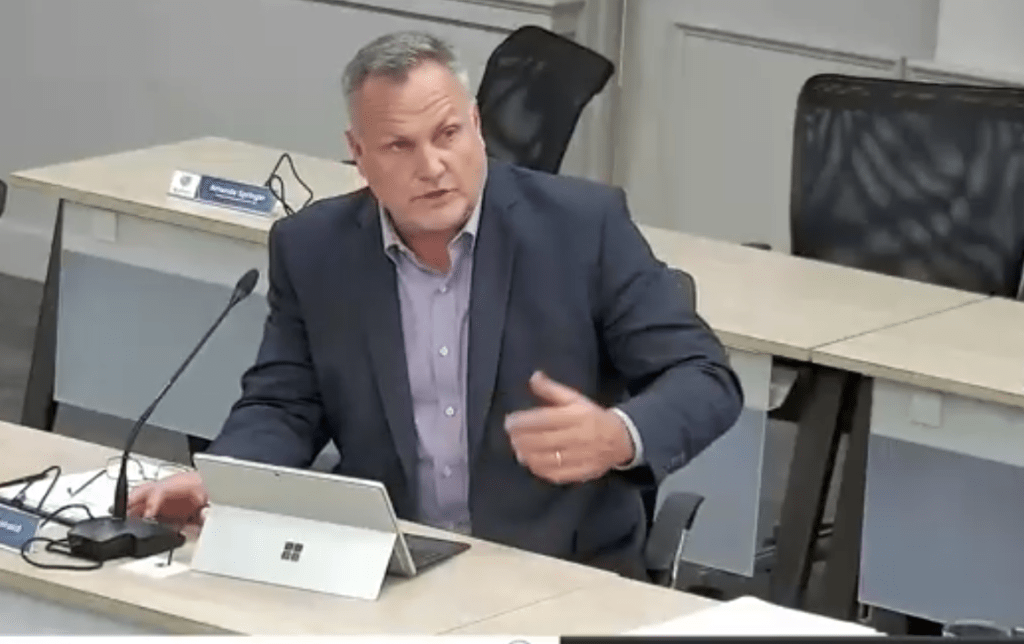
Councillor McDonald was recognized first and directed questions to the mayor and, by extension, CAO. Which staff needed the additional time? What protocol was followed? Where was the emergency? What was the threshold for declaring any such emergency? Which directors were involved? Does the mayor have confidence in staff or not? Is the CAO directed to monitor and watch communication between councillors and staff? And if so, directed by whom?
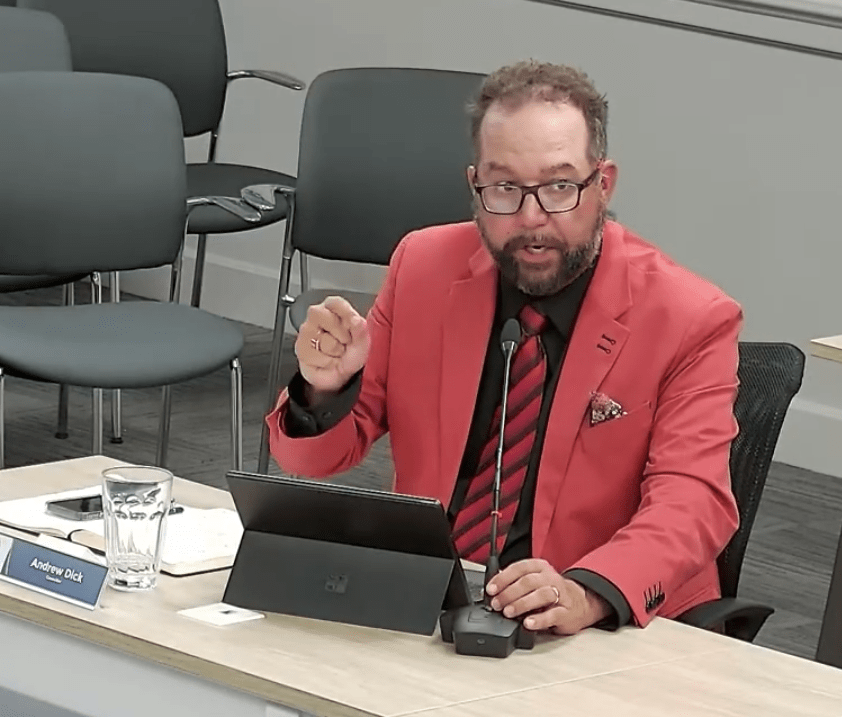
Councillor Andrew Dick indicated that be had consulted an attorney specializing in municipal affairs and an opinion was rendered to him that Council may have, in fact, violated its own bylaws by postponing the meeting. He claims that Councillor Cybulski’s post was merely a “preamble,” or a look ahead at what the councillor was hoping to discuss at the upcoming meeting.
In other jurisdictions, said the councillor, it happens all the time.
It was here where Reeve Peter Emon threw the two embattled members of the head table a bit of a lifeline, in that he suggested that the mayor and CAO caucus for five minutes before answering any further questions so as to ensure they don’t blow their answers, and by that I mean divulge something they shouldn’t or sleepwalk themselves into some sort of lawsuit.
Perhaps sound advice, but it sure didn’t work for the crowd in the gallery, such as it was. They seemed to look on it as a free opportunity for the mayor and CAO to get their stories straight.
So caucus they did, which is some fine parliamentary language that indicates the act of talking.
They came out of their caucus with their explanations.
The CAO offered that some items in Cybulski’s post cannot be dealt with publicly, as there were “names” involved, as in the names of individuals. There were comments that she felt crossed into the territory of commentary on staff performance. And finally, the fact that Cybulski’s post was widely shared and commented upon.
Councillor McDonald wanted to know what the problem was with the public comments. Are they not just part of the regular discourse? The CAO responded that all posts by councillors on specific items not yet officially presented are considered regular business. And if it’s regular business, then it falls within procedural guidelines.
The mayor jumped in to offer a statement that, based upon a 90 minute meeting with the CAO, It was felt that it would be best to postpone the meeting. In their view, there was Information in Cybulski’s post that had not yet been officially opened and discussed. These same things, they decided, would be better off being discussed at council.
And then they cancelled the meeting. Sorry, postponed.
Councillor McDonald asked the CAO if she was directed to, or had directed others to have some influence over the flow of communication. He also asked if any directors had reached out indicating they were unprepared for the September 9 meeting.
Apparently none of them needed additional preparation, which was the main reason given for the cancellation of the meeting in the fist place.
So if the staff didn’t need the additional time to prepare for the many “questions” the mayor alluded to in his decision to cancel, it takes us back to the original question, that being why was the meeting really cancelled?
The councillors assembled didn’t take this lying down, they had their legitimate concerns, and they were willing to use their right to ask questions in Council to get answers as to why something as serious as cancelling a meeting was contemplated, then carried out.
Council meetings are the public’s only real window into what’s going on, and so cancelling them, even postponing them might be the biggest affront to the democratic process one might find.
The fact that this cancellation messed up timelines for a number of important projects was the collateral damage apparently accepted by the mayor and CAO as a reasonable price to pay for saving face and avoiding scrutiny.
They put their need to “get their stories straight” over the need for municipal business to get done. They appear to have put personal requirements ahead of their professional ones, and in so doing not only sullied democracy, but also interfered with the operation and running of the corporation and the business of Council.
 NEWSMAGRENFREW