Many years ago, I undertook a project that would recapture and bring to life the histories of two places I has some familiarity with, St. Thomas the Apostle School and St. Francis Xavier Church.
In order to successfully bring that mandate to a successful outcome, I had to pour over hundreds of photos, documents, and other pieces of memorabilia that were stored in dozens of cardboard boxes. These boxes, and the treasures they contained, were almost always tucked away in some out-of-sight-out-of-mind part of the building, something I suspect is the case for most places, and even families, who take the time to save the stuff for preservation then, having no plan beyond that, consign these treasures to the ubiquitous cardboard box for somebody to come along in a couple of decades to make sense of it.
But what if nobody comes along?
When the keepers of the history flame at St. Thomas the Apostle envisioned the future of their building, and of the guidance that would be employed with respect to these valuable artifacts, they probably weren’t considering how that building would be torn down in the third decade of the Twenty-First Century. So that said, they probably never did any thinking about what might become of their work, their historical mission, to ensure the stories and the people of the local past are not lost to the people of the local present or future.
Demolition day, like moving day, is a busy piece of work with plenty of moving parts, and no, I’m way funnier than to just throw some random, low-hanging pun back at you. In the chaos, there can be pressure, the kind of pressure that can have an impact on decision-making. The kind of decision-making that goes into last minute “triages,” where things are suddenly processed according to a priority system that, at the time of the panic, can be more about convenience than other, more legitimate considerations. It’s at points in time like these where decisions can be made to divert some old boxes of “junk” to the landfill because there’s no more room on the truck.
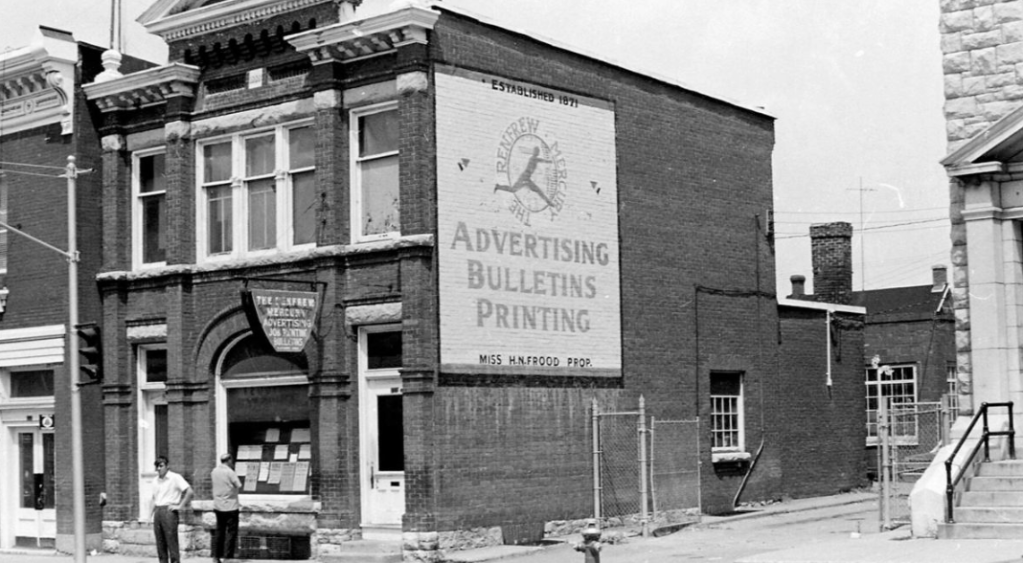
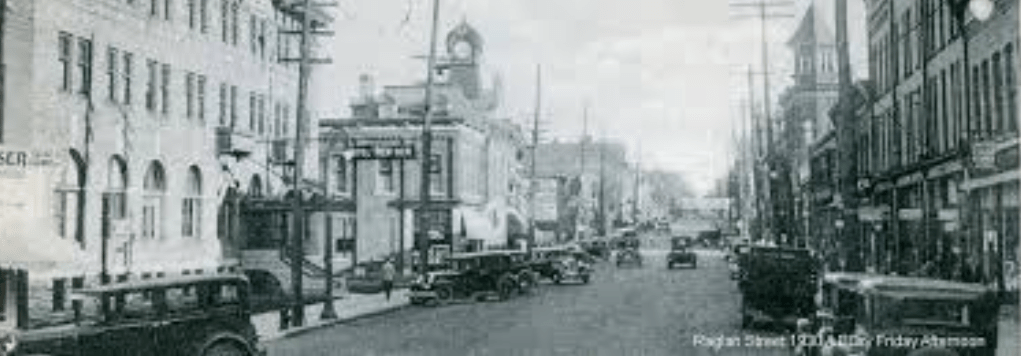
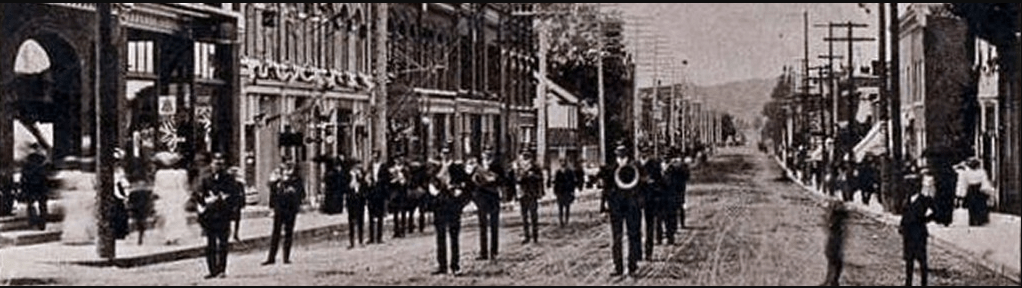
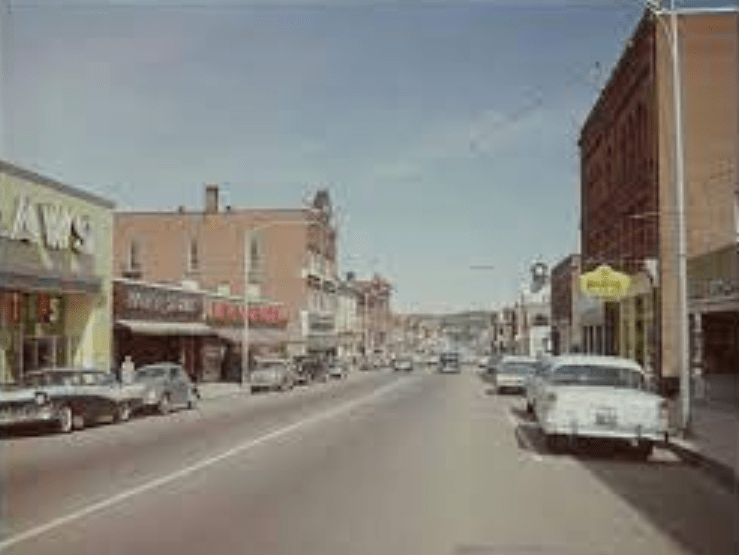
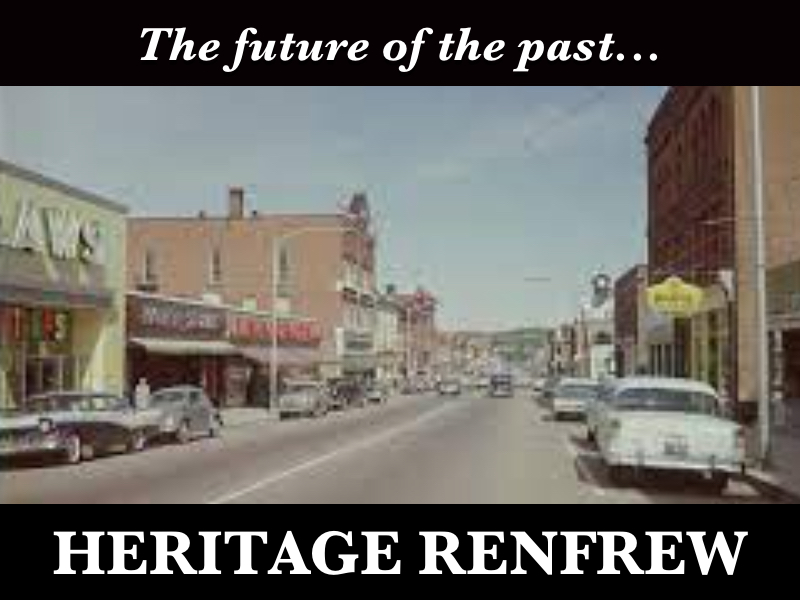
That’s why groups like Heritage Renfrew are so vital. As important as history is, and as important as the preservation of our story is, artifacts can be easily lost to the vagaries of time or to the decision of some aggravated moving day volunteer. Decades and decades of valuable history can be lost in the second it took to save space on a truck or clean out some old, un-used space.
Those many years ago, when I had completed my tasks, those artifacts went right back into those boxes in which they were found, and those boxes went right back to the darkness from which they came, their fate to be decided by a decision not yet made, by a person not yet identified. I can only hope that when that day comes, as it always does, the person making the decisions has at least some rudimentary understanding of how important those boxes and their contents are, and will not only make the decision to save them, but perhaps also set in motion some sort of plan where that history can be stored more safely, more meaningfully, and possibly with a greater degree of visibility and accessibility.
Those last two points are crucial, the visibility and accessibility pieces. For what good is history in a box?
Currently, Heritage Renfrew is housed as a carve-out at the current National Archives site, a place tucked away and out of sight, a place most locals know nothing about, much less know of its existence. And to put the locals and everyone else at ease, I can tell you not much is happening there. You have Heritage Renfrew, an undertaking made up entirely of volunteers that may or may not be open, and if it is, it’s by appointment only. And then you have the National Archives of Canada, probably the largest closet full of cardboard boxes in the land, although I’m sure I’m horribly understating it. The archives, on the other hand, are “open” everyday, in the sense that there’s security there, as in a single senior-citizen commissionaire, who I must say still has what it takes, since he chased me off the property when I arrived to take some pictures to support this story. But as open as it may be, it’s not open to you. The only folks who get past that cranky commissionaire are the folks who service the various systems associated with the building. We can’t have busloads of schoolchildren rummaging through important boxes holding important national artifacts without their important white cotton gloves on, now can we?
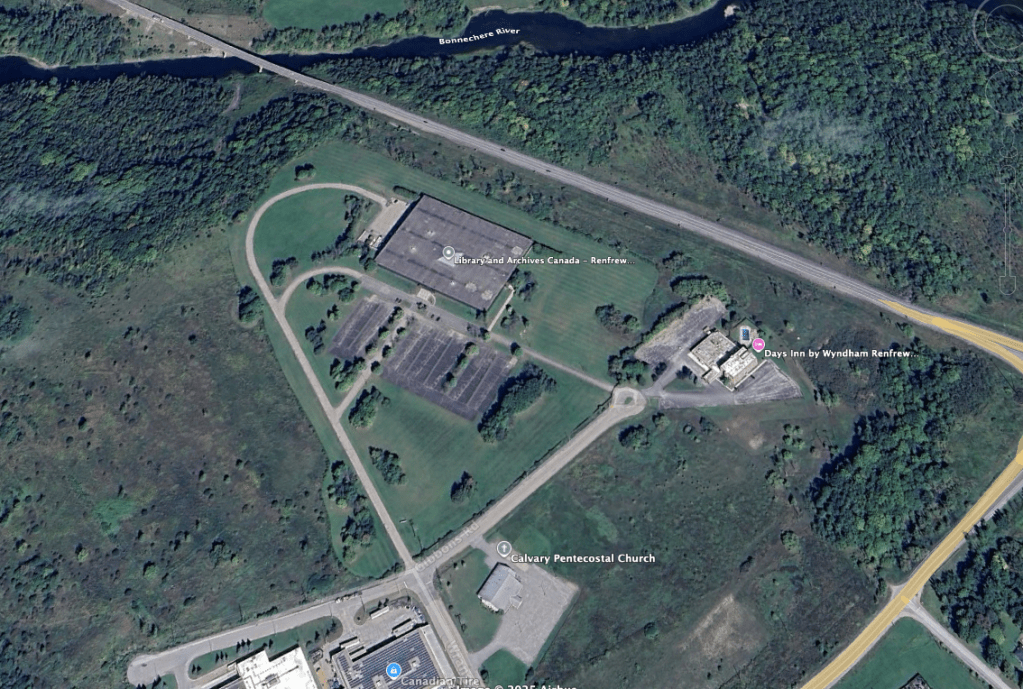
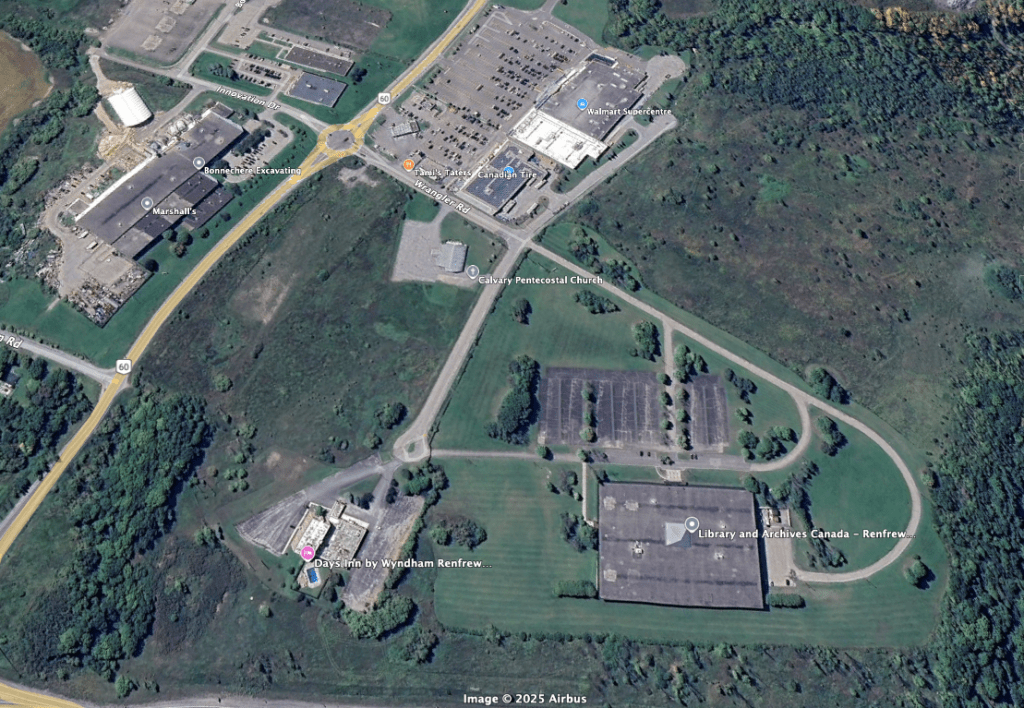
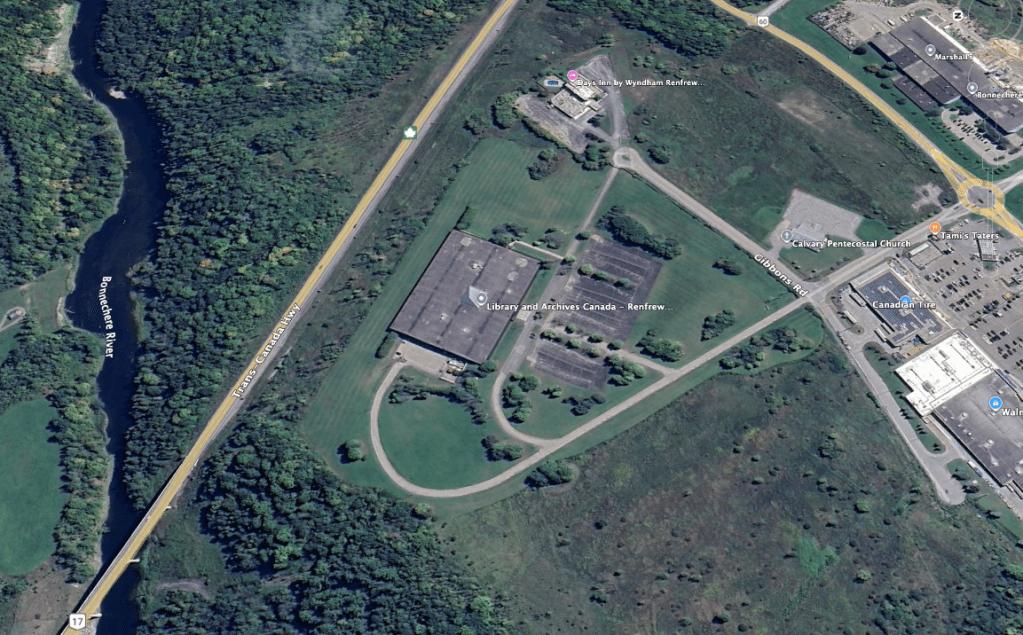
My point is to simply show that not too many people even know of the existence of Heritage Renfrew, much less the National Archives. You’ve got that attack dog commissionaire, a couple of volunteers (maybe), the guys who do the HVAC, the plumbing guy, maybe a dude or two from Yemen’s, and now me. I thought I detected a small drone buzzing about, providing air security, and that would indicate a drone operator, but it was only a mosquito.
Heritage Renfrew and the Town of Renfrew have a relationship of sorts, although certainly not a formalized one, one more reminiscent of inconsistent penpals of yesteryear. They talk on the phone (sometimes), email (sometimes), and meet in person (sometimes), but it’s mostly hit or miss. The most glaring weakness in the relationship is what appears to be a weakness of communication, with the town gently suggesting that this weakness exists primarily at the Heritage Renfrew end of the line. As in calls not returned, emails nor responded to, money and grant application dates slipping through fingers.
I know one of the main reasons cited for this is the lack of effective internet at the current location, or perhaps the lack of internet altogether. That’s a strange reason on a couple of levels.
Does this mean that Heritage Renfrew doesn’t have the wherewithal to pop for a $60/month internet package? Or are the National Archives located in some sort of brown spot of internet coverage? The former I could readily understand, especially since their spot is not open much of the time, and spending on the internet may be seen as a legitimate overstep in terms of allocating precious and dwindling financial resources. The second prospect, the imperfect coverage, makes no sense. Is someone trying to tell me that the internet is now better in Nunavut than it is behind Canadian Tire here in Renfrew?
Is the communication frailty a casualty of the “work is for work, and home is for home” mentality, the one where you don’t take your work home with you? The old “I’m not gonna check my emails on the weekend” kind of thing that clever executives use to demonstrate their cleverness?
The fact of the matter is that we have no time for any of this.
I would argue that historical artifacts, although saved, gathered, documented, and overseen by external associations, are of vital importance to any municipality, just like the one right here. These artifacts, although belonging to “private” or “volunteer” collections, are almost in the category of “eminent domain,” where the importance to the community supersedes any barriers that may exist vis a vis the curators, collectors, and stewards. As long as the municipal government can make a legitimate case for doing so, the expropriation of such archives and artifacts is something that ought to be looked into as a means of safeguarding the security of those very same archives as well as finding appropriate ways in which to make this material more accessible, under conditions, to the public.
Volunteers come and volunteers go, and we can all hope that volunteers keep coming, since they’re often the life-blood of so many important endeavours. But bringing Heritage Renfrew more concretely under the umbrella of the Town of Renfrew may well be the way to proceed moving forward. That way, a level of consistency and continuous oversight can be maintained, and the artifacts themselves would remain intact and inviolate, safe and sound, with no risk of them being tossed out to the trash in a moment of hurried inconvenience. There would remain plenty of volunteer opportunities, since the town is nowhere near being financially flexible enough to hire staff exclusively for this, and if they were to squeeze out the nickels to hire somebody, it would likely be a single all-by-themselves somebody.
All of this falls apart if the town were to swoop in and take control of the archives and then send them to the document graveyard over at the old Rec Centre. There are stories of staff being sent over there to retrieve documents and never coming back. So that’s not the way to go with these items, because they’re too important to be just saved from one dark closet only to be stashed in an even darker one.
Ideally, Heritage Renfrew should have a presence, perhaps even one along Raglan Street, and failing that, perhaps out at Ma-Te-Way, although I don’t know what kind of rent they’d have the ability to pay, unless of course any rent were to be written off by the town. The downtown location would be preferred, given the appeal of history to pretty much everyone and anyone.
The Birthplace of the NHL Museum is out at Ma-Te-Way, which makes pretty good sense because of the obvious hockey connection. The McDougall Mill Museum is another place with historical importance, but it too is limited by space, location, and the fact that the place already has a fairly robust collection of historical artifacts.
There was some loose and crazy talk of how some future library expansion might include some consideration for Heritage Renfrew, but this is no solution all, since we’ll all be history ourselves before that kind of thing would ever happen, especially since Ma-Te-Way and the Town Hall renovations kinda squeezed all the pennies out of the jar, including pennies that weren’t even in the jar. So this is no option.
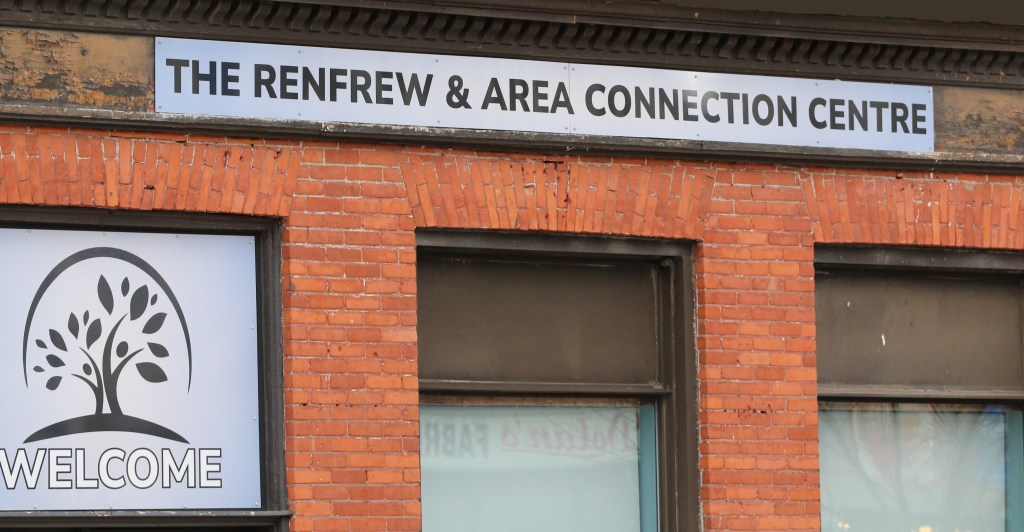
Unless Heritage Renfrew can be placed into that building adjacent to the library? You know, the one that once housed that Community Connection Centre before it had the rug unceremoniously pulled out from under it by a self-important police inspector eager to show small-town yokel staffers and politicians who’s-who in the local pecking order.
That building would be perfect. And it’s right beside the library, which is a synergy almost too good to be true. Placing Heritage Renfrew here gives the place instant credibility, allows town staff to monitor the asset, given that it’s across the street, and would immeasurably tighten up the interior lines of communication.
The space is there. The phones are there. The internet is there. And just as importantly, the people are there, given the pedestrian and vehicular traffic and the close proximity to all of Renfrew’s schools.
In closing, I want to thank all of the people, before, now, and into the future, who have taken on or will take on the responsibility of becoming stewards of our local history. Without your efforts, your interest, and your selfless passion, so many items of so much import may well have been lost to us over the years.
Without you, our story could never be told as fully as it should.

