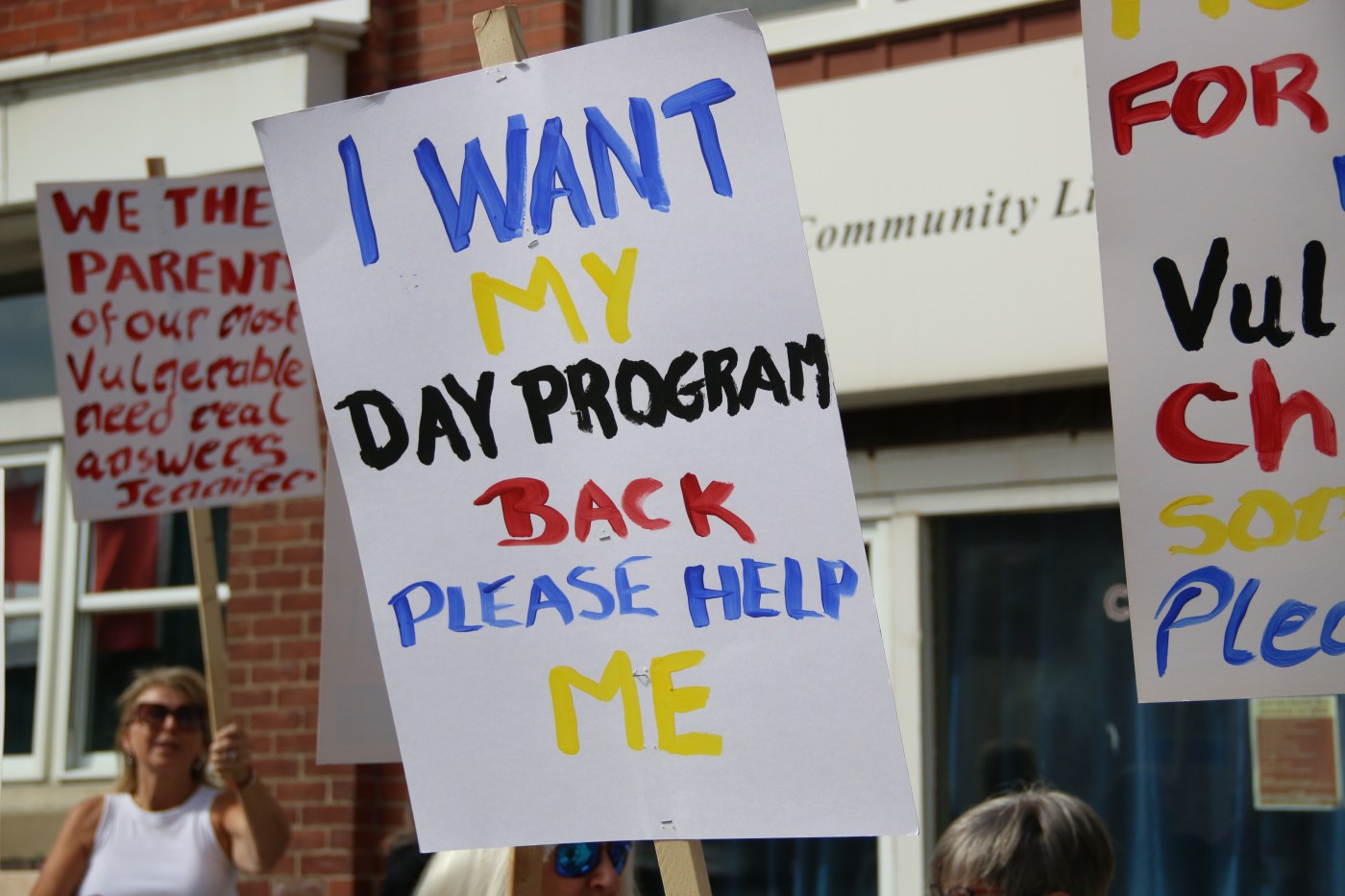
“CLRCS has never indicated that our community participation support (CPS) programs are closing. In fact, we have communicated our intention to improve the availability of our CPS programs and expand offerings so that people can receive the support they need to take part in our community in the evenings and on weekends.”
Jennifer Lavallee
So, if that’s true, why then are these very same services suffering what appears to be the slow death of starvation? Why does it appear that, ever since the dramatic societal shifts that came with the COVID 19 pandemic shuttering such programs, those programs never really re-established themselves to anywhere near where they were before 2020, both in the number of participants and in the quality of service and support?
I can tell you that the number of potential clients needing this service has not dwindled, because It never dwindles. And with inadequate government funding, if anything, the waiting lists for acceptance just gets longer.
So it’s difficult to square the Executive-Director’s statement with what can be seen on the ground. As well, I’m often reminded that this same Executive-Director pulled the kill switch on a similar program while she was in charge in Pembroke. In fairness, she has since indicated that switch was flipped before she took on a similar role in Pembroke to the one she has today in Renfrew. So, one way or another, there’s a bit of a track record there, if only by degree. The detrimental changes in Pembroke may well have taken place prior to her employment, but once she had assumed decision-making responsibilities, it’s not like she dropped everything to breathe new life into the program, or do anything else to reinstate it.
Maybe she’s being cute with her words, the way many people in government-related agencies feel they need to be when they spin their stories. Perhaps she’e correct in saying that she’s never indicated that the CPS programs are closing, in that she probably has never specifically indicated as much. As in said it out loud.
But that doesn’t mean she doesn’t intend to do it.
She’s just never indicated as much. Maybe the plan has been there all along. Maybe they just don’t feel the need to tell the rest of us about it. Better for managers to present such a move as a fait-accompli, something that’s already been done with little that anyone can do about it after the fact. And what better cover can you ask for when you plan to take such action than a pandemic or a labour dispute, or both. It’s perfect.
You can ram through huge structural changes to programs, program delivery, and working conditions while everyone is looking the other way. Senior managers love this Machiavellian stuff, often priding themselves mightily on their cleverness and sleight of hand. As if it were a good thing.
Other people take a different view of the practice.
There is no shortage of people around who are clamouring for this service and are experiencing no small amount of anxiety around its possible ending or reduction. Parents are struggling to care for their kids while at the same time attempting to maintain a sense of normalcy in terms of work commitments, care commitments, and even the basic modicum of a social life. Being a parent of a child is a 24-hour proposition every day of the year. It’s the same for parents with children who are developmentally disadvantaged, only they have to experience a constant and never-ending sense of alert. Sometimes they don’t sleep. And sometimes when they do, they do it with the proverbial one eye open.
In one case, and there may be others, the parent installed security cameras within the home to enhance supervision of a child that has demonstrated some tendency towards self-harm.
So, In a very real sense, the Day Program is as much for the benefit of the parents as it is for their adult children.
I don’t know what the Executive-Director’s grand plans are for the CPS program, one way or another. I mean, if I take her statement at face value, wonderful times are indeed ahead. I just don’t see any evidence of it on the ground, nor in the things that families say to me.
It’s funny — not funny — that of all of the parents and families I’ve spoken to over the past several weeks, not a single one of them indicated they felt good about the future of the program. And in fact, every single one of them indicated their belief that the program was definitely in the Executive-Directors crosshairs.
So at the very least, there’s a huge disconnect between the Executive-Director’s words and assurances and how those words and assurances are landing with affected stakeholders, primarily the clients, their families, and their caregivers.
I wonder if those wonderful times she speaks of are more administrative than they are practical. I wonder how many people will be shouldered aside and hurt by these wonderful times? And I wonder if the wonder in it will be strictly felt by the Executive-Director in terms of her potential fulfillment of a managerial goal.
There is a definite communications gap here between two important parties. The party with the greatest responsibility for that communication should take note of the gap and close it by cementing those assurances with tangible indicators of positive intent.
This program is essential. It’s removal will certainly come with political consequences..

