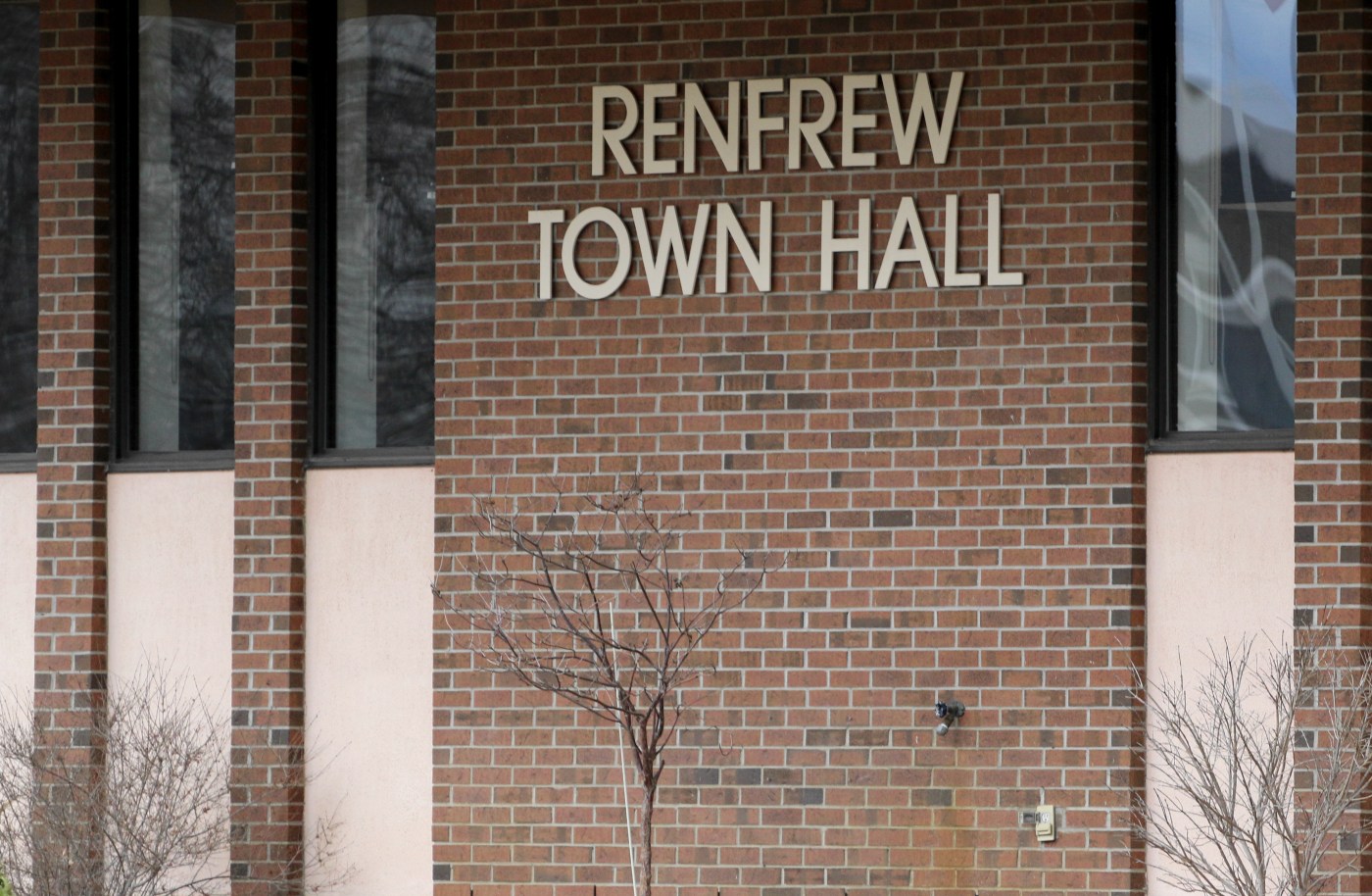
When a labour dispute stretches into its fourteenth week, staying on the sidelines may be the easiest political choice. Renfrew Reeve Peter Emon has chosen a different path.
There is an old political instinct when it comes to labour disputes: stay out of it.
Pick a side and you risk alienating the other. Say too much and you may be accused of interfering. Say too little and people wonder why their elected representatives aren’t doing anything at all.
Renfrew Reeve Peter Emon has apparently decided that there is another option.
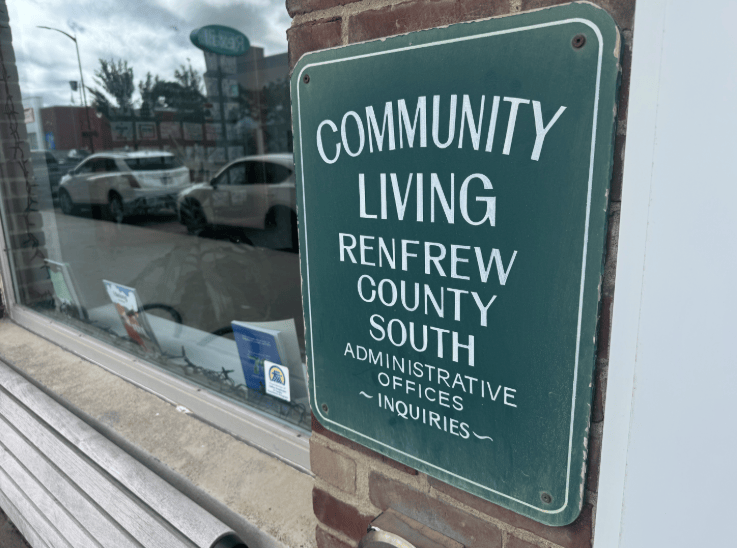
He has put forward a motion to Renfrew Town Council proposing a two-pronged approach to drawing the provincial government’s attention to the hardships being created by the ongoing labour dispute between Community Living Renfrew County South and OPSEU Local 472.
The key word is attention.
Not blame, not criticism, and no taking of sides.
It’s simply an attempt to make sure that the people ultimately responsible for provincial funding understand what is happening on the ground in Renfrew and Arnprior.
It’s a different kind of political intervention.
Emon’s proposal was rooted in the Town of Renfrew’s Road to 2035 initiative, which contains a series of commitments concerning the future of the community.
Among them is a pledge that:
“The Town of Renfrew will support an accessible, supportive and age friendly community by advocating for community health and wellness through strategic partnerships.”
Emon appears to have interpreted that commitment rather literally.
His first proposal called for a letter from Renfrew Mayor Tom Sidney to Ontario Premier Doug Ford and Michael Parsa, Minister of Children, Community and Social Services — the provincial ministry responsible for funding Community Living.
The proposed letter would not tell the premier or minister who is right or wrong, nor would it criticize Community Living or OPSEU 472. Nor would it throw shade at the provincial government. Instead, it would simply explain that an extraordinary number of people in the community are experiencing hardship because the dispute has continued for so long.
And, perhaps most importantly, it would point out that the strike has now entered its fourteenth week. Fourteen weeks is a long time for any labour dispute. And it’s an especially long time when the people affected aren’t simply employees and an employer, but also families and vulnerable clients whose lives can be disrupted by a prolonged work stoppage.
The proposed message to Queen’s Park would essentially be: “This has gone on long enough. Please do whatever you can to help get the parties back to a path of resolution.” That’s hardly a radical political position. And by the way, those were my words.
Emon’s second proposal was considerably more ambitious.
He suggested that the Town’s communications staff interview 10 to 15 families of Community Living clients who have been adversely affected by the strike. The interviews would be videotaped.
The objective would be to give those families an opportunity to explain, in their own words, what the prolonged dispute has meant for them.
Those interviews could then be presented to provincial decision-makers, giving government officials something that can sometimes be lost in labour negotiations, press releases and political correspondence:
Again, Emon’s proposal specifically avoided turning the interviews into an opportunity to attack either side. The families wouldn’t be asked to criticize Community Living, the union, or the provincial government. The idea was simply to let them explain their experiences.
Council, however, accepted only one of Emon’s two proposals. The letter from Mayor Sidney was approved. The videotaped interview proposal, however was rejected.
Sometimes the safest political position is the middle of the road and I think that’s unfortunate. Not because I believe the Town of Renfrew should insert itself into the collective bargaining process. It shouldn’t.
The actual negotiations belong to the union and the employer. But there is a significant difference between interfering in a labour dispute and pointing out its consequences. And that distinction is precisely what makes Emon’s proposal interesting. The people being affected are, after all, Renfrew’s people. They’re our friends, our neighbours, and they’re members of our community.
A labour dispute may technically be between two parties, but after fourteen weeks its effects inevitably spill beyond the bargaining table. That makes it increasingly difficult for elected officials to simply pretend that it isn’t happening.
For politicians, however, that can be a dangerous proposition.
Get involved and one side may accuse you of taking the other’s side. Remain silent and constituents may wonder why you aren’t doing anything. Emon’s motion attempted to find the narrow strip of pavement between those two extremes.
Right down the middle of the road, offering no blame, no recriminations, no accusations, and no endorsement of one side or the other. Just an acknowledgement that people are hurting and that perhaps someone with influence should remind the provincial government of that fact.
A letter from a private citizen can certainly be powerful. But a formal communication from a municipality carries a different kind of institutional weight.
And Peter Emon isn’t simply a municipal politician. He has also served as Warden of Renfrew County, giving him years of experience in municipal government and relationships with people at various levels of government.

I’m not suggesting that Premier Ford and Minister Parsa are sitting around on Friday nights playing poker with Emon.
But I’d wager there’s more than a passing familiarity.
And when a municipal leader with that kind of experience sends a message to Queen’s Park, there’s at least a reasonable chance that somebody there will pay attention. And every little bit helps.
There’s another aspect of Emon’s initiative that deserves recognition, in that he’s running for mayor of Renfrew in this October’s municipal election.
That makes his decision to wade into this particular issue all the more interesting, since labour disputes are political minefields. There’s very little upside to getting involved and plenty of opportunity to annoy somebody. Yet Emon has stepped into the middle of it anyway — carefully, deliberately and without assigning blame.
In my view, that took some courage.
It would have been much easier to do nothing. It would have been easy to say that collective bargaining is a matter for the union and employer. It would have been easy to point out that the Town of Renfrew isn’t a party to the dispute. And technically, all of those things would be true.
But leadership isn’t always about doing what is technically required.
Sometimes it’s about recognizing that something is happening in your community and deciding that, even if you can’t fix it yourself, you can at least try to help.
Nobody should expect Peter Emon — or Tom Sidney, or Renfrew Town Council — to suddenly resolve the dispute. Because they can’t.
The issues between Community Living Renfrew County South and OPSEU Local 472 are ultimately going to have to be resolved by the parties themselves, with whatever assistance the collective bargaining process provides.
But that’s not the point.
The point is that somebody in a position of local leadership has decided that fourteen weeks is long enough to warrant doing something.
Perhaps the letter will make a difference. Perhaps it won’t. Perhaps it will be read carefully in a minister’s office. Maybe it won’t make it past a secretary or political aide. All of that is possible. Maybe it will get the same kind of response the Town of Renfrew itself often shows to its own letter-writing citizens, which is crickets in the night.
But at the very least it’s an attempt. And nobody scores on a shot they don’t take. The prospect of potential failure, or being ignored, shouldn’t get in the way of any of us to do the right thing.
But at least it will put another voice into the conversation — the voice of a municipality representing people who are living with the consequences of a dispute that has gone on for months.
And perhaps that’s where Emon’s initiative has its greatest value.
It might encourage somebody else to act. Maybe another politician. Maybe another municipality. Maybe even another community leader. And perhaps maybe even somebody with considerably more influence than any municipal politician possesses. Who that might be I couldn’t guess, but it’s definitely not impossible.
But the point here is that a legitimate effort was made. And so there won’t be any videotaped interviews, which would have surprised me had they, Council, gone for that. But they pushed forward the letter aspect, something the Council as a whole should be congratulated for.
Nobody is looking for grand announcements of solutions to end the strike. Something like this has no grand solutions. But sometimes it’s important to say simple, yet important things. Things like “this whole thing is hurting the community at large. And that we think it’s gone on long enough. And maybe you could help?”
Peter Emon seems to have now put that message on the record.
And in a dispute where almost everybody seems to have a reason to stay on the sidelines, I feel that’s worth something.

