Nobody in their right mind would ever want a strike, although there are those who feast upon the opportunity to make money advising and facilitating the parties of a strike, or any other type of labour disruption.
Political consultants, labour consultants, communications and intelligence consultants, lawyers, private security, and private investigators would all fall into the category of the types of people who actually benefit from a strike.
There are also people out there with political agendas involving ulterior motives, and by no means are such people necessarily confined to just a single side of any argument or dispute. Even if there were to be obvious good guys and bad guys in a dispute, the good guys are always going to have a bad guy in there somewhere, and even the bad guys will have a good guy somewhere in there. So these terms can be interchangeable for either or both sides of any dispute.
But no matter what, no matter what your personal view is of strikes, work stoppages, lockouts, unions, or government underfunding, it really boils down to the same thing:
Any work stoppage, for any reason, represents a failure.
It’s a failure in communications and of good-faith. It’s a failure on the part of all actors to see the totality of their views and actions and how they negatively impact the relationship between management and workers. It’s also a failure at a much higher level, where the game plays out as a great contest between a provincial government and the public-sector workers it employs. A high-stakes political game where those calling the shots can wage their ideological wars while those below them serve as their infantry, and as such, take the brunt of the casualties. Not to mention the collateral damage to civilians caught in the middle.
In my view, there are more than plenty of people caught in the crossfire here, and everywhere else this fight is taking place across the province.
The most obvious would be the clients and their families. I won’t go into why this is because, well it’s kind of obvious and I’ve spoken about it at length before, so no need to go through that again. I’ll save everyone the Current Events lesson. But I can reiterate that this is a very vulnerable group, they are suffering, and in all honesty, they need their regular workers back.
But there are others in my view.
Rank-and-file union members of any local are caught in the middle as well. Nobody wants to go on strike, to be encouraged to be more aggressive, to be encouraged to have a louder voice than maybe you’re comfortable with. Some of them would be legitimately fearful around their employment prospects, or the types of conditions that may await them when all this is resolved. They have their own families to worry about. There are some that even have clients of the very system in which they also work, so they get a doubly-whammy. And yes, as in any organization, some may be uncomfortable with decisions or tactics decided upon by their leadership, whether that be their local leadership or the broader OPSEU leadership.
I’ve been on strike twice in my career, and in one of those events I was the tactical guy for the union side. I know fully well how decisions I made weren’t universally accepted by every one of my fellow members. One day I’m a co-worker and the clown in the staff room, but then another day, in a different context, I become a leader of sorts myself, giving them new directions but from a different source. And people being people they don’t necessarily warm to this kind of adjustment or change. They may just view this as swapping out one tyrant for another.
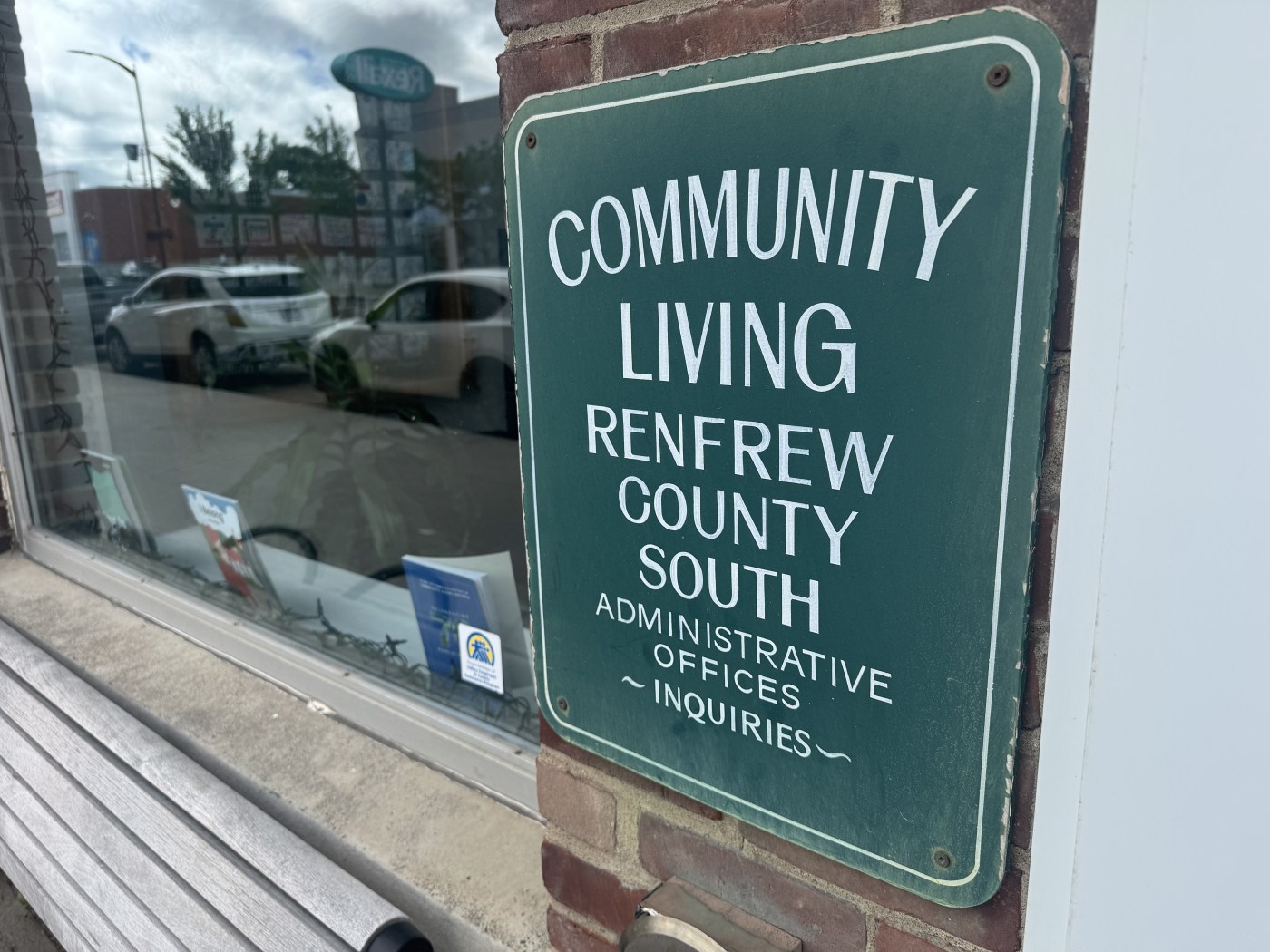
I’m going to include the CLRCS Board of Governors in this battle damage assessment as well. It’s my belief that the Executive-Director calls the shots, and that’s a full stop. If I’m wrong I’m wrong but I don’t feel it. I believe they’ve been susceptible to some of the criticism that’s gone their way, but what makes that exceedingly frustrating and maddening for them is the fact that they can’t seem to be able to do a damned-thing about the situation that they’re in, other than to keep their heads down. To date, as far as I’m concerned, their greatest crime has been to remain silent, although that’s not a crime. Also, saying nothing is also the same thing as saying something, and in this case that comes across as looking like complicity in some of management’s decisions, tactics, and communications.
There is really nothing in it for these people other than perhaps professional prestige and acceptance within a peer group. But they all seem to be established in their own right, most of them with important managerial careers already up and running, so their social gravitas should be strong enough to not need all the stuff that’s been thrown their way over the past eleven weeks or so. I can only surmise that they are, simply put, loyal to the Executive-Director on a personal level, which would at least help explain that silence.
Nevertheless, I include them in my list of people impacted by collateral damage.
It may well be that local leadership in both camps are, as well, people caught up in the crossfire. Wars are driven at the highest levels, and orders to execute certain actions come from the top and are directed downwards. And that very well may be the case here, or at least a significant factor. A decision is made at command headquarters to take that hill. But it won’t be the decision-makers out there on the front line, it’ll be the frontline commanders on the ground and the troops under them that will storm that hill in a hail of hostile fire. While the big boys and girls smoke their cigars and sing the praises of those who become casualties.
There are plenty of issues to fight about in this dispute. I’ll be honest, I don’t like the talk of dismantling worker rights enshrined in previous collective agreements. I don’t like the thought of seniority rights and staffing protocols being shredded at the behest of one side. And I don’t like any talk of a reduction or elimination of the agency’s Day Program. I’ll have more to say on this last point in a future post.
To me, a previous collective agreement is a place to start in an effort to enhance what’s in there, not to detract or take away from it. It ought to be an exercise in progression and not regression, but that’s where political ideology comes along to wreck everything.
Understanding the money issues are like playing a game of whack-a-mole. Two vastly different narratives involving the Bill 124 remedy, with nobody seemingly prepared to step down from their rhetoric.
If there are villains in this, most assuredly chief among them is the provincial government of Premier Doug Ford. I have absolutely no doubt that this crisis was intentionally engineered by Ford, and he did it in the most effective way possible, by starving these agencies of the funds they need to realistically execute their mandates. Instead Premier Ford would create a crisis, and actually pour hundreds of millions of dollars into crisis-enabling actions, like hiring replacement workers at higher rates, feeding them, lodging them, and transporting them. The same thing apples to all the private security and private investigators and their expenses. And let’s not forget all those consultants, lawyers, and political advisors out there making their fortunes on the backs of everyone negatively affected by this strike.
Yes, there are people who actually benefit from strikes, and unfortunately, both sides have them.
I don’t how much of a role OPSEU plays at the provincial level in terms of decision-making in the trenches, but I’d have to think that there’s some trickle-down direction. I’d be surprised if there wasn’t. OPSEU President JP Hornick seems to be the poster-person for the kind of thing that people like Doug Ford, or perhaps more realistically a good chunk of his political base, opposes. Hornick is a decorated activist, and to a lot of people would come across as horribly “woke,” not that woke-ism has to be a terrible word. But to some it’s a red flag waved in their face, and they’d view the OPSEU president as a lightning rod for their version of a culture war.
So, to the government, Hornick represents an ideological opponent in the form of a “radical left-wing activist” — my words — and to the government might present an opportunity to achieve three things: Fight Hornick for who they are personally, fight Hornick on ideological grounds, and diminish Hornick in the eyes of OPSEU’s rank and file, and therefore, diminish the largest public-sector employee union the government has to deal with. And they hate public-sector unions.
I wish Billy Denault would come out and at least listen to the workers. He doesn’t have to make any promises, everybody knows that he can’t. He too, takes his direction from above. He’s not said anything negative about anything, only offering the same boilerplate statement common to all Tory MPPs. And while that’s frustrating, at least it can be understood on a political level. Not under any circumstances could I truly believe a young man such as this deriving any joy from seeing workers and families hurting for ten-plus weeks.
So it could very well be that we’re witnessing a war at the very top between the structures that represent both sides involved. And if true to form, the casualties will pile up among those at the lower echelons of those structures.
When at war, sometimes people cross lines of propriety. They do things that come across as intentionally aggressive, often-times intimidating,
My initial involvement in this whole thing was triggered by the presence of security guards and private investigators paid for by the government to provide surveillance of the striking workers and to secure the physical integrity of the agencies office and programming space. But it was also a flat-out attempt at intimidation of the workers. In the past month I’ve met many of those workers and many of those families impacted. None of them really struck me as being members of the Red Brigades or Baader-Meinhof desperado leftist bands of the 1970s. I can’t imagine any Molotov cocktails sailing through the windows at CLRCS from this crowd
That said, a picket of any sort in front of a residence of anyone is inappropriate. When you allow this kind of thing to happen, you throw away a good chunk of your public good will.
Hard or soft, quiet or loud, these kind of pickets don’t go over well with the general public, the same public that you want to energize to take action on your behalf. It’s the kind of thing that can actually lose you supporters. Plus, you’re dragging the neighbours into it, and probably not in a good way. For them, it’s all fun and games until they realize the dog won’t stop barking and they can’t hear their show.
Hired security, hired investigators, and questionable picketing practices should not really have a place in any of this.
 NEWSMAGRENFREW